

 sale@henanminecranes.com
  +86-0373-3088011
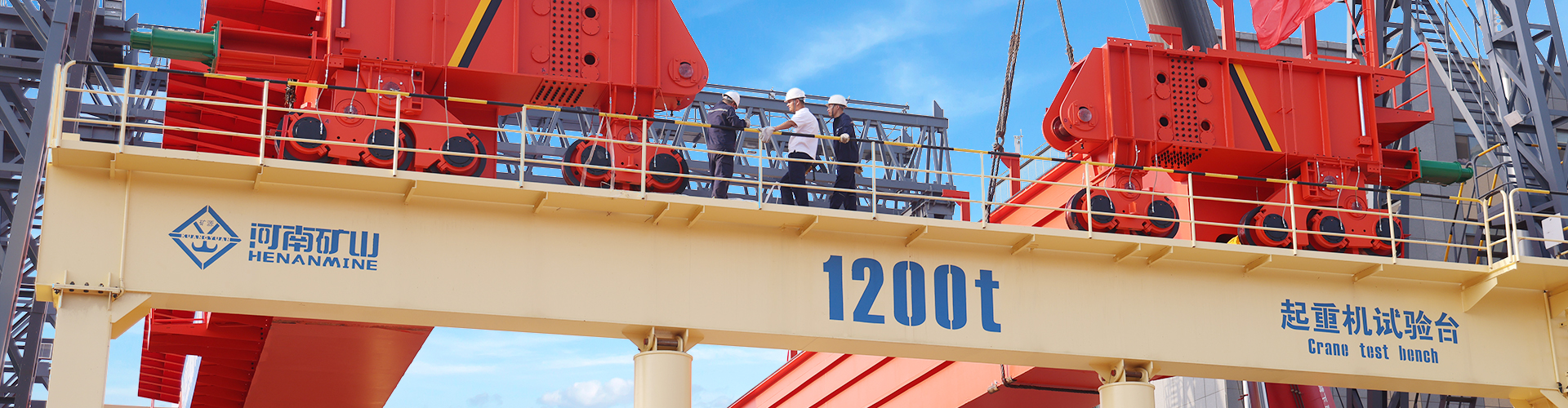
What Is an Overhead Crane?
An overhead crane, also frequently called a bridge crane or an industrial crane, is a type of heavy-duty lifting machine that moves materials horizontally along one or more runways. The key characteristic of an overhead crane is that its structure is elevated—either supported by the building's walls or columns, or by freestanding legs—which leaves the floor space below completely clear for other operations .
In the world of industrial material handling, overhead cranes are the unsung heroes. They are the backbone of manufacturing plants, shipping yards, and warehouses, designed to lift, lower, and transport extremely heavy or bulky loads with precision and safety . By utilizing the overhead space in a facility, these systems free up valuable floor space, eliminate ground traffic, and significantly reduce the risk of product damage and worker injury .
The Three Core Components
Every overhead crane, regardless of its size or complexity, is built around three fundamental parts :
The Bridge: This is the main horizontal structure that spans the width of the work area. It consists of one or two beams (called girders) and travels the length of the facility. This component gives the crane its "bridge-like" appearance and its alternative name.
The Hoist: This is the mechanism that does the actual lifting and lowering. It consists of a motor, a drum or wheel, and a rope or chain with a hook on the end. The hoist is what grabs onto the load.
The Trolley: This is the unit that carries the hoist. It travels back and forth across the bridge, allowing the crane to position the load anywhere along the width of the work area.
How Does It Work? The Three Axes of Movement
The magic of an overhead crane lies in its ability to move a load in three different directions, providing complete coverage of the work area below:
Hook Movement (Up/Down): The hoist raises or lowers the load vertically.
Trolley Movement (Side-to-Side): The trolley moves the hoist and the load horizontally across the bridge.
Bridge Movement (Forward/Backward): The entire bridge structure moves along the runway, carrying the load horizontally along the length of the facility.
Common Types of Overhead Cranes
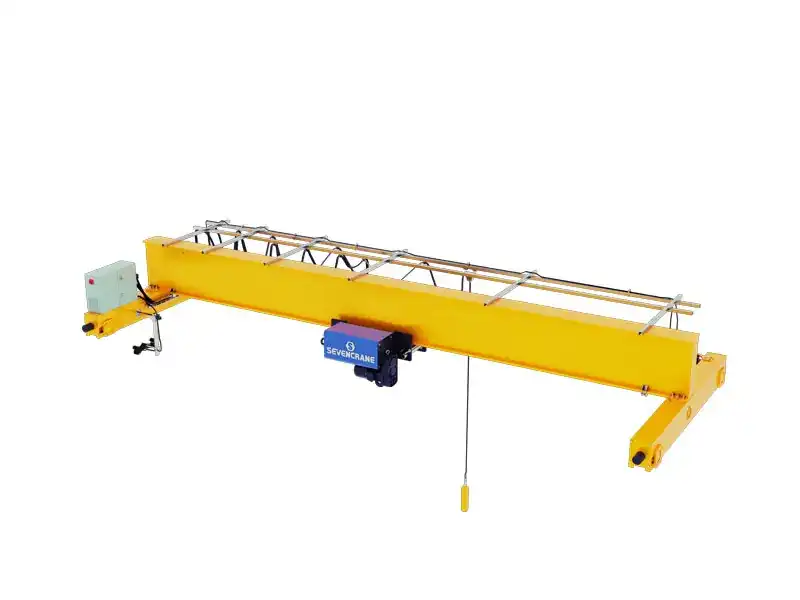
1.Single Girder Bridge Cranes
Design: As the name suggests, this crane uses a single beam (girder) to support the trolley and hoist, which typically runs on the lower flange of the bridge .
Best For: Lighter loads (typically up to 20 tons) and shorter spans. They are a cost-effective solution for manufacturing plants, maintenance facilities, and warehouses with moderate lifting needs .
Advantages: Lower initial cost, lighter dead weight (reducing building structural requirements), and simpler installation.
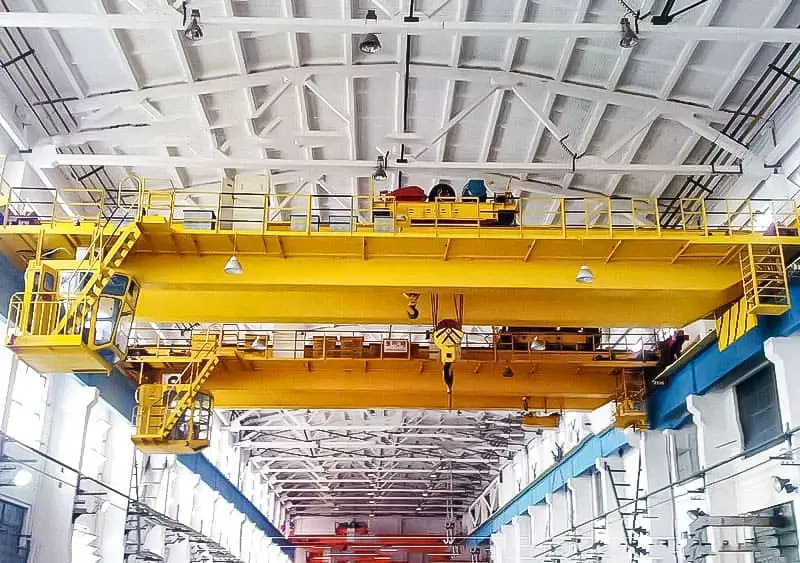
2.Double Girder Bridge Cranes
Design: These cranes feature two parallel beams that support the trolley and hoist, which run on rails mounted on top of the girders .
Best For: Heavy-duty applications, longer spans, and higher capacities (sometimes exceeding 100 tons). They are common in steel mills, foundries, shipyards, and large-scale fabrication shops .
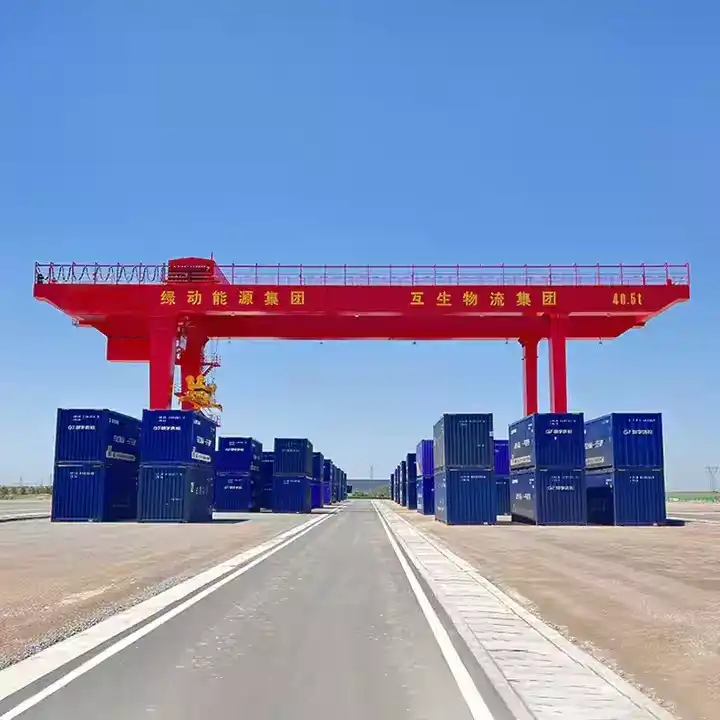
3.Gantry Cranes
Unlike bridge cranes that rely on building-supported runways, gantry cranes are self-supporting. The bridge is rigidly supported by legs that travel on wheels along rails on the floor or ground .
Best For: Applications where a permanent overhead runway isn't feasible. This includes outdoor storage yards, construction sites, shipyards, and rail yards. They are also used indoors when building steel is limited or when a mobile solution is needed .
Variations: Full gantry cranes have two legs, while semi-gantry cranes have one end supported by a leg on the floor and the other end running on an overhead runway.
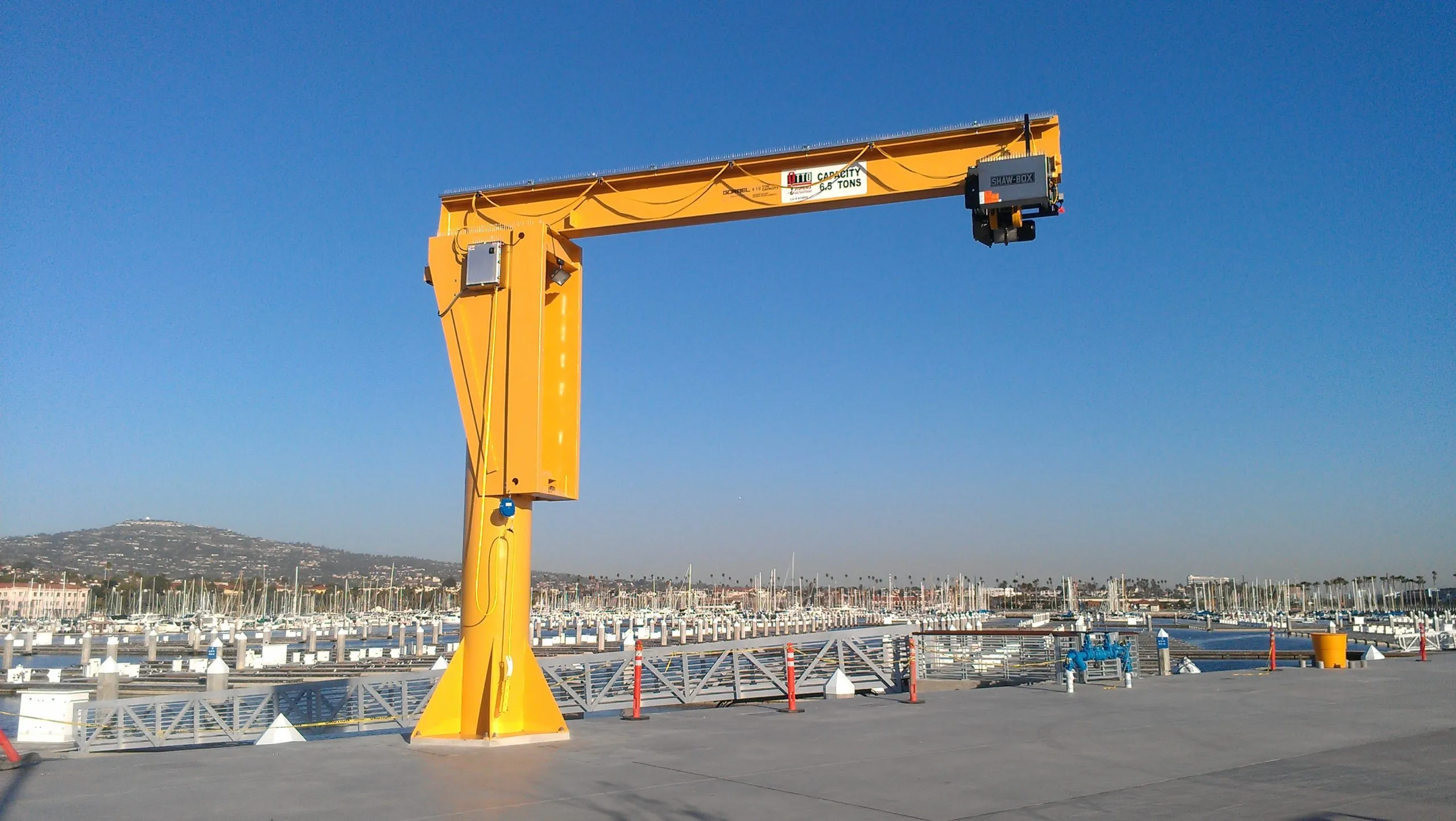
4. Jib Cranes
Jib cranes are ideal for tasks that are localized and repetitive. They consist of a horizontal arm (the jib) that supports a movable hoist. The jib can be mounted to a building column or pillar (column-mounted) or to a freestanding floor foundation (freestanding) .
Best For: Workstation-specific tasks, such as loading a machine, assembly line work, or servicing a specific area of a workshop.
Advantages: They offer excellent coverage for a circular area and are a cost-effective way to take the strain out of repetitive lifting tasks in a defined workspace.
Single Girder Bridge Cranes vs Double Girder Bridge Cranes
| Feature | Single Girder Crane | Double Girder Crane |
|---|---|---|
| Design | One bridge girder; hoist runs on bottom flange. | Two bridge girders; hoist runs on top rail. |
| Capacity | Light to medium (Typically up to 20 tons). | Medium to heavy (Can exceed 100 tons). |
| Span | Shorter to moderate spans. | Long spans possible with high stability. |
| Hook Height | Lower (hoist hangs down). | Higher (hoist fits between girders). |
| Initial Cost | Lower. | Higher. |
| Best Application | Warehouses, machine shops, maintenance. | Steel yards, foundries, heavy fabrication. |
| Duty Cycle | Intermittent to moderate (CMAA A, B, C). | Severe to continuous (CMAA D, E, F). |
Bridge Crane vs Gantry Crane vs Jib Crane
| Feature | Bridge Crane | Gantry Crane | Jib Crane |
|---|---|---|---|
| Support | Building structure (runway beams). | Self-supported (legs on floor). | Wall or floor column. |
| Coverage Area | Full rectangular bay area. | Full rectangular bay area. | Localized circular area. |
| Floor Space Use | None (fully overhead). | Partial (legs & floor rails). | Minimal (base or mount). |
| Best Capacity | Very High (up to 500+ tons). | High (up to 100+ tons typical). | Light to Medium (up to 15 tons typical). |
| Mobility | Moves entire facility length. | Moves entire facility length (on rails). | Rotates, but stationary position. |
| Installation | Complex, permanent. | Moderate, can be relocated. | Simple, permanent or semi-permanent. |
| Best Use Case | Facility-wide production. | Outdoor yards or weak buildings. | Dedicated workstations. |
Why Are Overhead Cranes Used?
Industries across the globe rely on overhead cranes for several compelling reasons:
Increased Safety: By moving heavy loads overhead, they eliminate the need for workers to manually handle or guide dangerous loads on the floor, significantly reducing the risk of injury.
Maximized Space: Since they operate in the air, they free up valuable floor space for production, storage, or other activities.
Heavy Lifting Capability: Overhead cranes can be engineered to lift virtually any weight, from a few hundred pounds to several hundred tons.
Improved Efficiency: They can move loads quickly and precisely across large distances, streamlining production and logistics processes.
Reduced Product Damage: The controlled, smooth movement of a crane reduces the risk of damaging expensive materials or products compared to other methods.
What Industries Are Suitable for Bridge Cranes?
The versatility of bridge cranes makes them indispensable across a wide spectrum of industries. Any business that regularly handles heavy, oversized, or hazardous materials can benefit from an overhead lifting solution. Here are some of the primary sectors that rely on bridge cranes:
1. Manufacturing and Heavy Fabrication
This is the most common application. Bridge cranes are the workhorses of factories, used to move raw materials (like steel plates or coils) into position for cutting, welding, or assembly. They also move finished heavy machinery or components through the production line and onto trucks for shipping.
2. Steel and Metal Production
In steel mills, foundries, and scrap yards, the environment is harsh and the loads are extreme. Specialized double girder bridge cranes are essential for handling molten metal in ladles, storing and retrieving heavy ingots, and using magnets to load scrap metal into furnaces. These cranes are typically designed for severe duty cycles (CMAA Class E or F) to withstand constant use.
3. Power Generation and Utilities
Power plants—whether nuclear, hydroelectric, or fossil fuel—rely on bridge cranes for critical maintenance. They are used to assemble and disassemble turbines, generators, and pumps during outages. In hydroelectric facilities, they lift massive water intake gates.
4. Shipping and Logistics
In ports, rail yards, and large distribution centers, cranes are vital for loading and unloading cargo. While giant container gantries handle ships, smaller bridge and gantry cranes inside warehouses move heavy pallets, machinery, and containers from trucks to storage.
5. Construction and Infrastructure
Bridge cranes are used in precast concrete plants to lift and move heavy concrete sections. On large infrastructure projects, they assist in assembling heavy equipment and placing prefabricated components.
6. Automotive Industry
From moving massive dies in and out of stamping presses to handling complete vehicle bodies on assembly lines, overhead cranes are integral to automotive manufacturing. They provide the muscle to keep production flowing smoothly.
Conclusion
An overhead crane is more than just a hoist on a track. It is a sophisticated material handling system designed to solve the fundamental challenge of moving heavy objects safely and efficiently within a workspace. From small workshops to massive steel mills, these machines are an invisible force that powers modern industry.
Henan Mining Cranes Co., Ltd. is a leading crane manufacturer in China. With decades of industry experience, we have become a trusted partner in the global material handling solution field. We are committed to providing comprehensive professional services tailored to your specific needs. We recommend the most suitable crane products, offer accurate quotations, and design customized solutions. Welcome to contact us.
Get In Touch
Email: sale@henanminecranes.com
Website: https://henanminecrane.com/
Whatsapp:16627702870
phone:+86-0373-3088011