PRODUCT INTRODUCTION
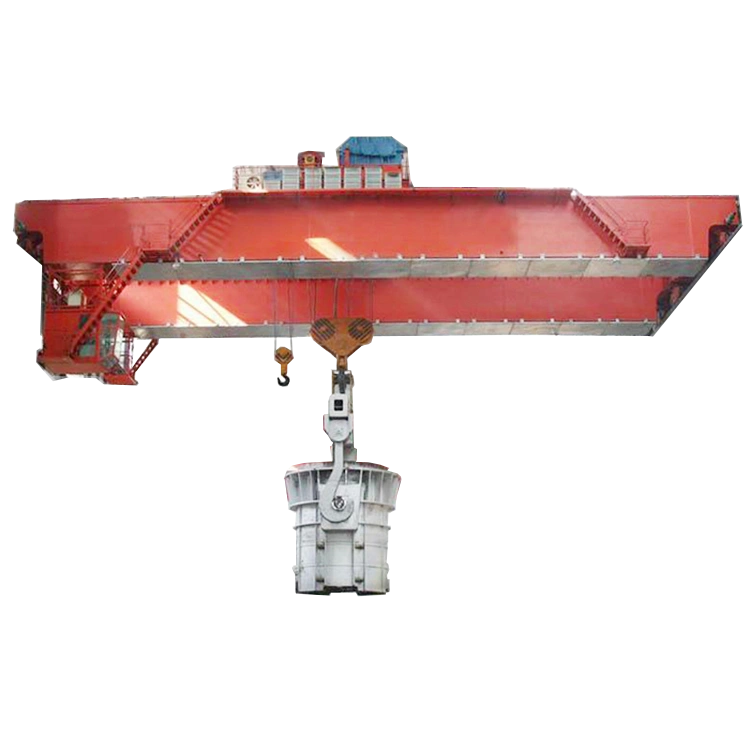
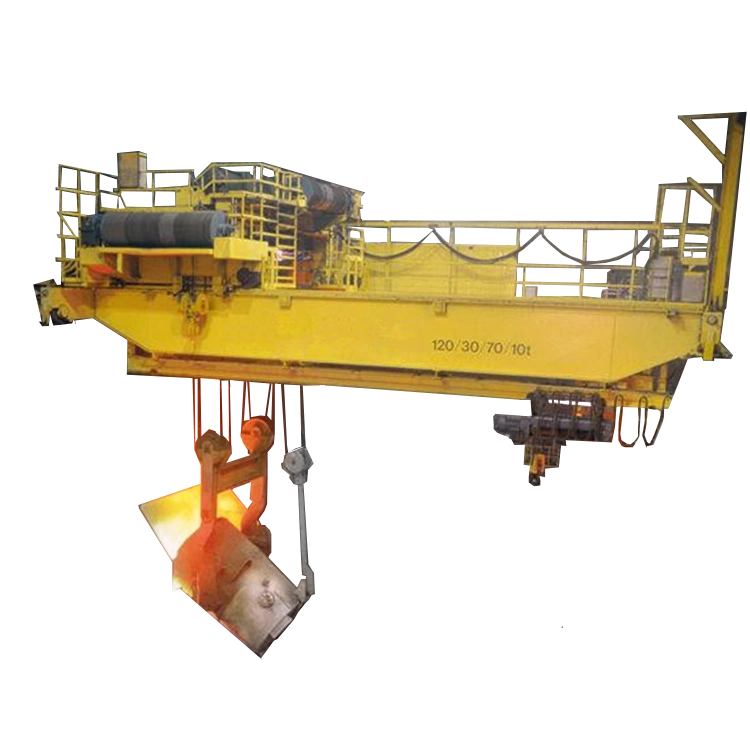
The Metallurgy Charging & Casting Crane is a heavy‑duty, specialized overhead crane designed for the harsh environments of steelmaking, foundries, and non‑ferrous metal production. It performs two critical functions: charging (feeding raw materials, scrap, hot metal, or alloys into furnaces) and casting (handling ladles of molten metal for pouring into molds or continuous casting machines). Unlike standard industrial cranes, this equipment must withstand extreme heat, heavy dust, molten metal splashes, and high‑intensity duty cycles.
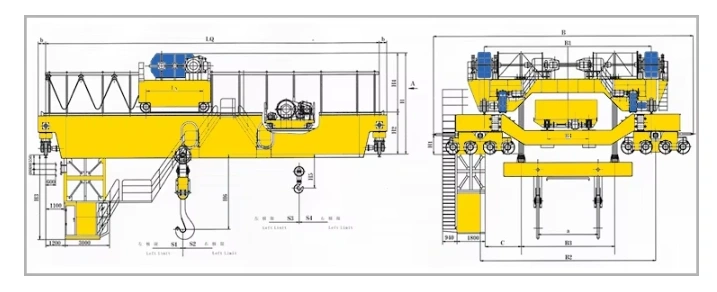
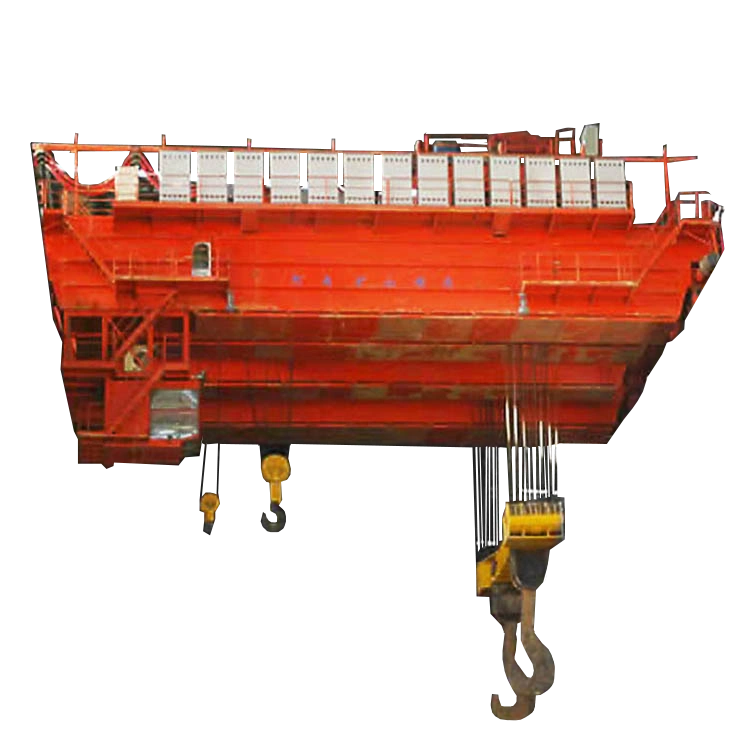
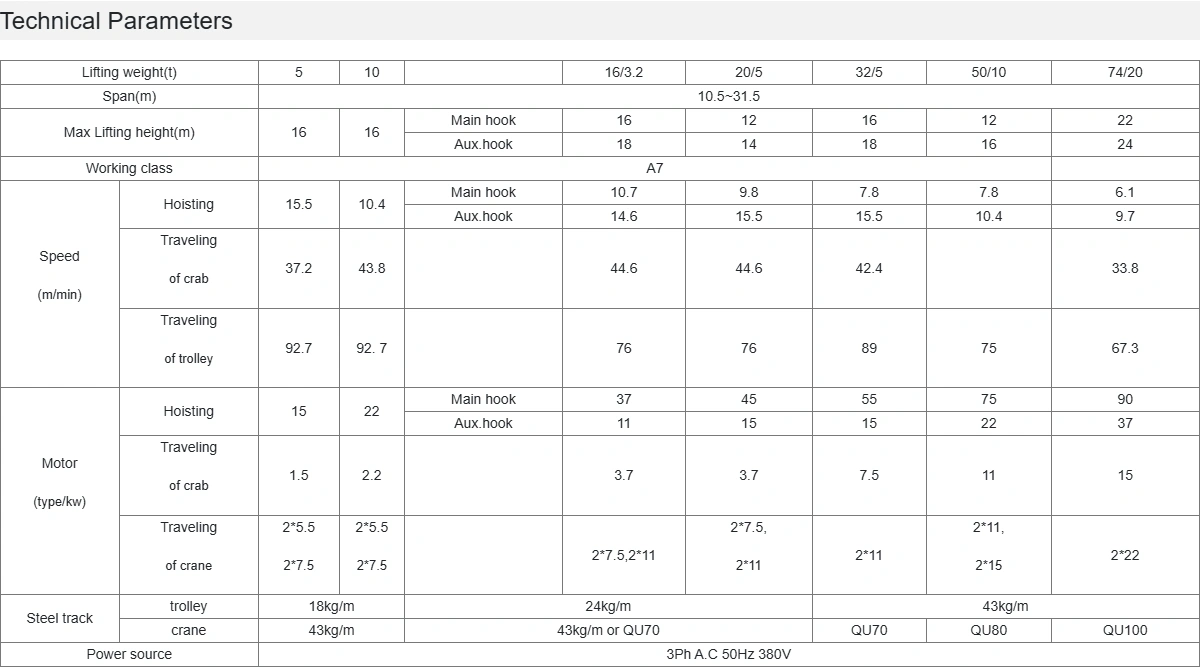
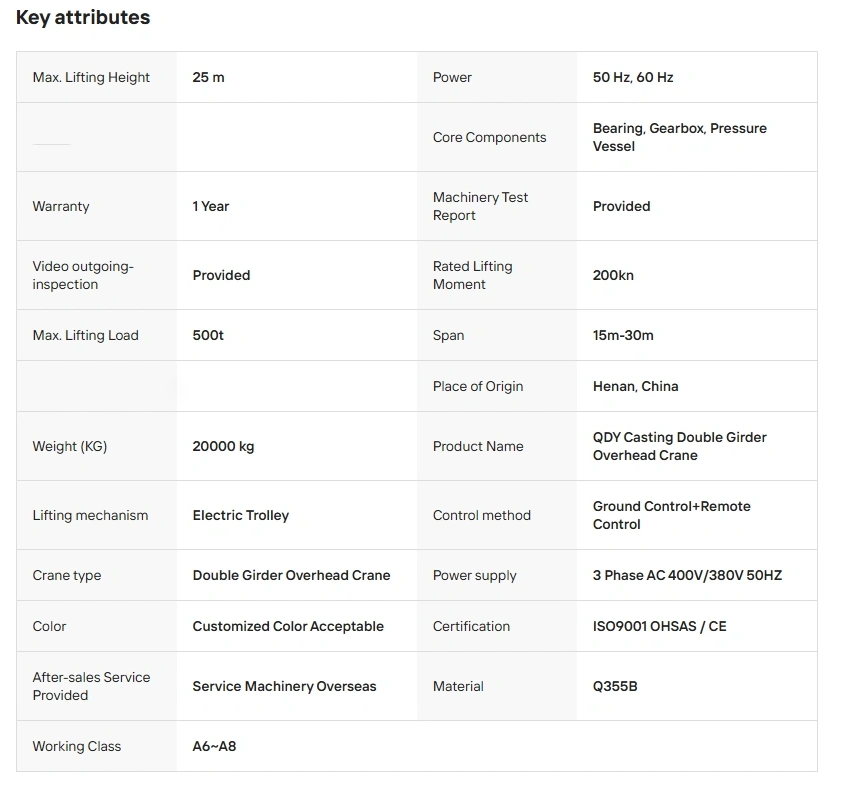
The crane typically features a double girder construction for exceptional rigidity and stability, with a main hoist for ladle handling (capacities from 50 to over 500 tons) and an auxiliary hoist for charging baskets or other attachments. The trolley is often equipped with a crab that allows precise positioning of the ladle or charging bucket. Safety and durability are paramount: heat‑resistant insulation, emergency ladle tilting mechanisms, overload protection, and redundant braking systems are standard. The crane is operated from a heat‑shielded, air‑conditioned cab or via remote control.
APPLICATION
1. Electric Arc Furnace (EAF) Charging
Scrap Basket Handling: Lifting a large scrap basket (filled with ferrous scrap, pig iron, DRI) from the charging floor and positioning it above the EAF.
Furnace Feeding: Opening the furnace roof and tilting or lowering the basket to discharge scrap into the furnace.
Alloy & Flux Addition: Using the auxiliary hoist to lift small buckets of alloys (ferroalloys, lime, carbon) and add them during the melt.
2. Basic Oxygen Furnace (BOF) Charging
Hot Metal Transfer: Lifting a torpedo ladle or transfer ladle containing molten iron (up to 300 tons) from the mixer to the BOF.
Scrap & Flux Charging: Using the crane to tip scrap boxes and lime/flux bins into the BOF mouth.
Master Lance Handling: Positioning and replacing the oxygen lance (using an auxiliary hoist) for blowing operations.
3. Ladle Handling at Secondary Metallurgy Stations
Ladle Transfer: Moving full ladles of molten steel from the EAF or BOF to ladle furnaces (LF), vacuum degassers, or alloying stations.
Ladle Turret Positioning: Placing ladles precisely onto the ladle turret of a continuous casting machine.
Ladle Preheating: Lifting ladles to preheating stations and positioning them under covers.
4. Continuous Casting (Concast) Operations
Ladle onto Turret: Lifting a full ladle (typically 100‑300 tons) onto the ladle turret of the caster.
Tundish Handling: Lifting and positioning tundishes (intermediate vessels) under the ladle.
Mold & Oscillator Maintenance: Using the crane to change molds, oscillator tables, and segments.
5. Foundry & Casting Shop – Manual Molding
Crucible & Ladle Pouring: Lifting a ladle of molten iron, steel, or non‑ferrous metal (aluminum, copper, brass) and pouring it into sand molds or permanent molds.
Cope & Drag Handling: Lifting heavy cope (top) and drag (bottom) mold halves for assembly.
Core Setting: Placing large sand cores into molds using the auxiliary hoist.
6. Non‑Ferrous Smelting (Aluminum, Copper, Zinc)
Anode & Cathode Handling: In copper refineries, lifting anodes and cathodes from electrolytic cells (specialized version, but similar charging/casting principles).
Aluminum Melting Furnace Charging: Lifting charge buckets of aluminum scrap, ingots, and alloys into reverberatory furnaces.
Molten Metal Transfer: Moving ladles of molten aluminum to holding furnaces or casting lines.








 sale@henanminecranes.com
  +86-0373-3088011