LX Single Girder Suspension Overhead Crane
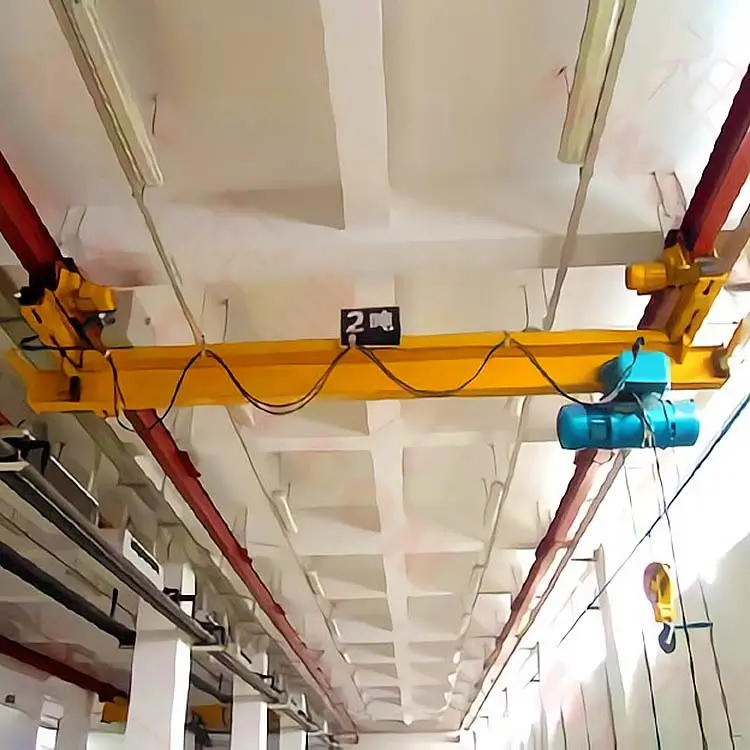
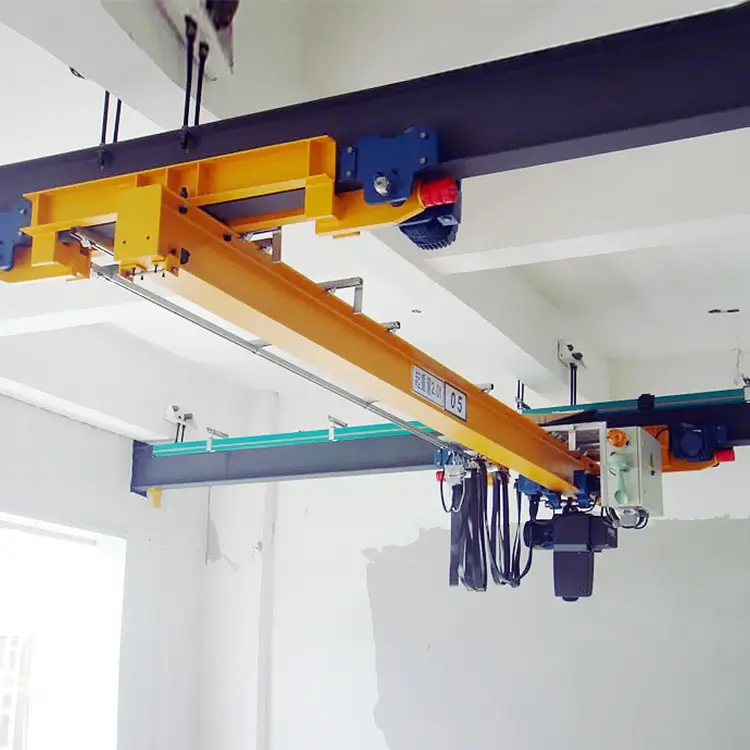
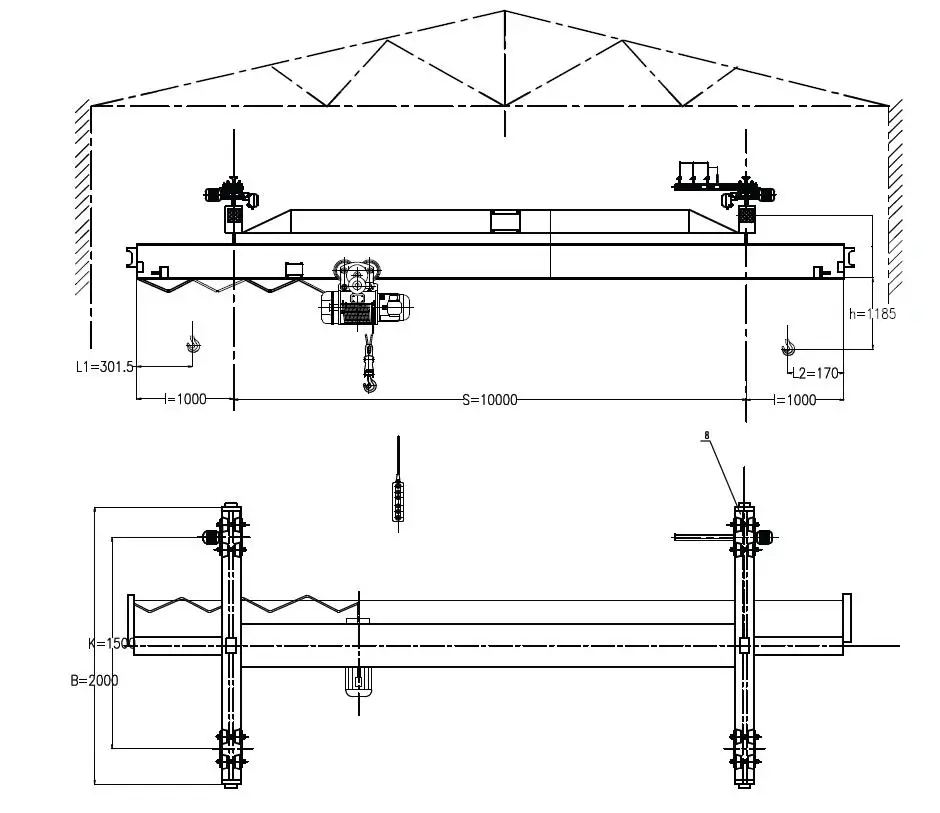
The LX single girder suspension overhead crane — also referred to as a single girder underhung overhead crane — is engineered for seamless integration with CD or MD type electric hoists on a monorail system. Its compact design minimizes space requirements while offering reduced headroom needs, lighter overall weight, and low wheel load pressure.
This crane is built as an economical light-duty lifting solution that operates on standard I-beam tracks. Available in capacities ranging from 0.5 to 5 tons, it covers working spans of 3 to 16 meters. Operation is simplified through ground-level control, and it performs reliably in ambient temperatures from -20°C to 40°C.
This equipment is not suitable for environments containing combustible, explosive, or corrosive substances.
Understanding Crane Model Codes: A Quick Guide
The model code of a crane concisely indicates its type and key features. The naming logic below is standard across much of the industry, helping you quickly decipher product specifications.
Decoding Our Product: The LX Model
Applied to our product, the code LX is clearly defined:
| Position & Letter | Represents | Meaning & Context |
|---|---|---|
|
First Letter L (Crane Type) |
Girder Type | Denotes a crane built around a single or double girder beam structure. |
| Q (Crane Type) | Bridge Type | Indicates the overarching category of overhead cranes that run on elevated runway beams. |
|
Second Letter X (Feature/Purpose) |
Underhung | Specifies that the crane travels on the bottom flange of an overhead runway beam, a space-saving design. |
| D (Feature/Purpose) | Hook | The most common type, used with a standard hook for general lifting. |
| Z (Feature/Purpose) | Grab | Designed to operate a grab bucket for bulk materials like sand or grain. |
| H (Feature/Purpose) | Hoist | Emphasizes the integration of a specific hoisting mechanism. |
L: Identifies it as a Girder Type crane.
X: Specifies its Underhung travel mechanism.
Therefore, LX designates a Single Girder Underhung Bridge Crane—an optimal solution for facilities requiring efficient overhead lifting while maximizing headroom and floor space utilization.
Our LX series Electric Underhung Cranes are engineered and manufactured in accordance with industry standards (e.g., referencing codes like Q10405). This section provides detailed technical information for engineers, facility managers, and procurement specialists.
1. Product Overview & Definition
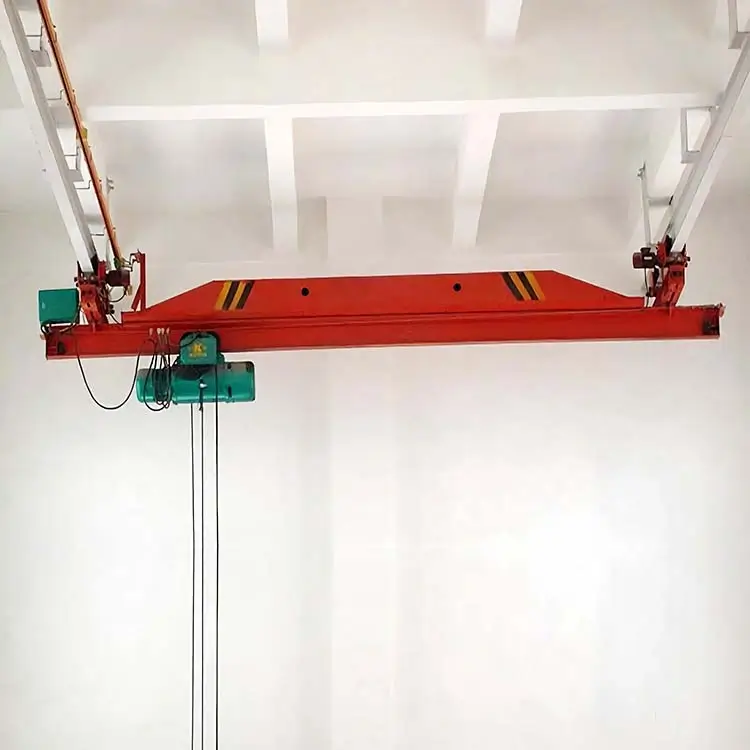
An Electric Underhung Crane is a specialized type of Electric Single Girder Bridge Crane. Its primary distinguishing feature is that the bridge travels along the bottom flange of overhead runway beams, making it a suspended system.
Key Components: The crane consists of an electric hoist, a metal structure (girder), underhung traveling mechanisms, a power feed system, and electrical controls.
Core Function: The hoist moves along the girder, which itself travels suspended from runway tracks. The load is handled by the hoist's lifting attachment, typically a hook.
2. Key Advantages & Ideal Applications
Compared to traditional top-running single girder cranes, the LX Underhung design offers significant benefits:
Simplified Installation: No need for massive supporting gantry or crane runway structures. The runway beams can be directly attached to existing building roof supports.
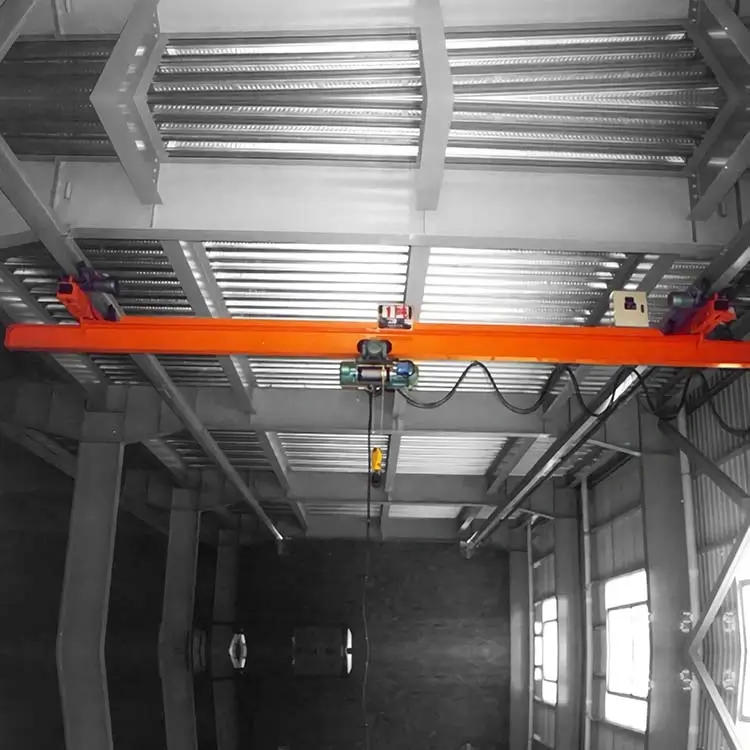
Superior Space Utilization: Provides maximum hook coverage and wider left-right travel limits within the same building footprint, as the crane operates flush with the ceiling.
Optimal for Low Headroom: Ideal for facilities where vertical space is constrained, as it maximizes the available lift height under the beam.
Application Scope: Designed for standard industrial environments in workshops, warehouses, assembly lines, and processing stations. It is not designed for use in explosive, corrosive, or nuclear environments.
3. Configurations & Types
Underhung cranes are categorized by their girder and support point configuration:
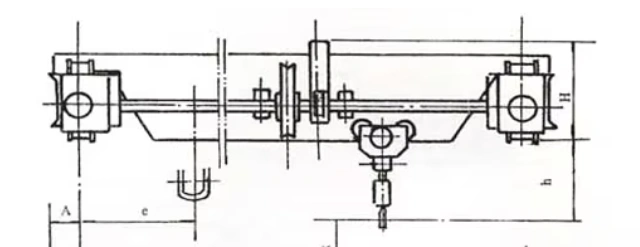
LX Single Girder Underhung Crane: Features one main girder supported at two points. This is our standard, cost-effective model for most applications (as depicted in the main product visuals).

Double Girder Underhung Crane: Utilizes two main girders for higher capacity and rigidity, supported at two points.

Multi-Point Supported Underhung Crane: Employed for very long spans (>~30m), where the girder is supported at three or more points to prevent excessive deflection. This can be configured with single or double girders.
4. Critical Technical Parameters & Tolerances
Our LX cranes are built to precise performance and safety standards. Key manufacturing and installation tolerances include:
Work Classification: Cranes are designed for duty classes A3 to A7 (per ISO/FEM standards).
Span Tolerance (ΔS): The allowable deviation in bridge span is tightly controlled: ±2.5mm for spans ≤10m, increasing progressively for larger spans.
Wheel Alignment: The lead/lag distance between wheels on the same side is limited to S/60 to ensure smooth, crab-free travel.
Girder Levelness (For Dual Girder Cranes): The height difference (Δh) between two girders at any point is critical for equal load sharing. It is maintained within 3mm for girder centers ≤2m apart.
Wheel Contact: Under full load, all driving wheels maintain contact with the rail. Passive wheels are designed with minimal allowable gap (2-4mm depending on span) to ensure stability and proper force distribution.
End Approach & Safety: Cranes are equipped with limit switches for both hoist and travel motions. For underhung systems, special attention is given to the end truck over-travel limiter to prevent mechanical failure.
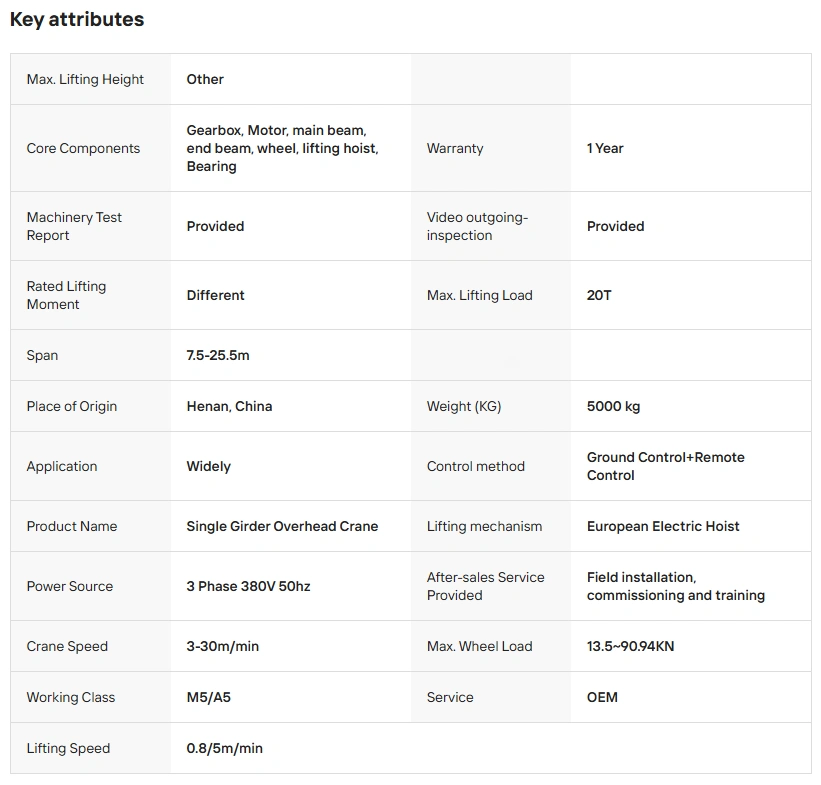
| Parameter | Specification Range |
|---|---|
| Lifting Capacity | 0.5 - 40 tons |
| Span | 3 - 26 meters |
| Lifting Height | 3.2 - 100 meters |
| Lifting Speed | 0.32 - 40 m/min |
| Trolley & Bridge Travel Speed | 3.2 - 40 m/min |
| Duty Class | A3 - A7 |
5. Choosing Your LX Crane
When specifying your LX crane, the primary parameters to define are:
Lifting Capacity (Tonnage): Select from our standard range.
Span (S): The horizontal distance between the runway tracks.
Lift Height (H): The required hook travel distance from floor to uppermost position.
Duty Cycle: Determine your required usage intensity (A3-A7).
Optional Features: Push vs. motorized travel, radio control, variable speed, and specialized lifting attachments.
Why Trust Our LX Cranes?
Beyond meeting specifications, our manufacturing process ensures superior weld integrity, accurate machining, and professional painting. Every crane undergoes rigorous testing before shipment. This commitment to quality ensures your LX Underhung Crane delivers reliable, safe, and efficient performance for years to come.
The LX single girder suspension crane is the ideal lifting solution for factories and warehouses with limited headroom, specifically where clearance from the rail track to the roof truss is 500mm or less.
Maximize your vertical workspace. The LX overhead crane is specifically engineered to operate efficiently in low-clearance environments, requiring only 500mm of space between the rail surface and the roof truss's lower chord.
Ideal for challenging low-clearance settings, the LX single girder crane delivers robust performance in standard factories and storage facilities. It is uniquely suited for installations where the critical dimension from the track to the roof truss measures 500mm or smaller.
Wechat:
+86 16627702870