
 sale@henanminecranes.com
  +86 16627702870

Introduction
In the demanding world of foundries, steel mills, and heavy manufacturing, material handling equipment must withstand extreme conditions—high temperatures, dust, heavy shocks, and continuous operation. Among the various types of overhead cranes, the double girder casting bridge crane stands out as the industry gold standard for handling molten metal, heavy molds, and massive castings.
Unlike standard single girder cranes, a double girder casting bridge crane is specifically engineered for durability, safety, and precision under the toughest environments. Whether you are pouring molten iron, moving ladles, or positioning large castings, this crane type offers unmatched lifting capacity and operational reliability.In this comprehensive guide, we will explore the design features, working principles, key advantages, applications, and selection criteria for double girder casting bridge cranes.
What Is a Double Girder Casting Bridge Crane?
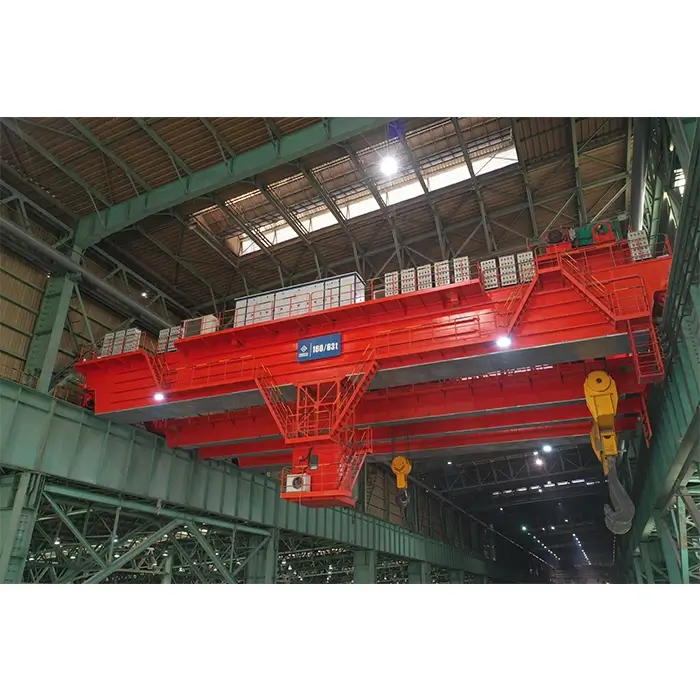
A double girder casting bridge crane is a heavy-duty overhead crane with two parallel bridge girders running along runway rails. The hoist and trolley travel on rails mounted on top of these two girders. This configuration is specifically adapted for casting applications—meaning it includes features like heat-resistant insulation, redundant braking systems, and slow, precise speed controls.
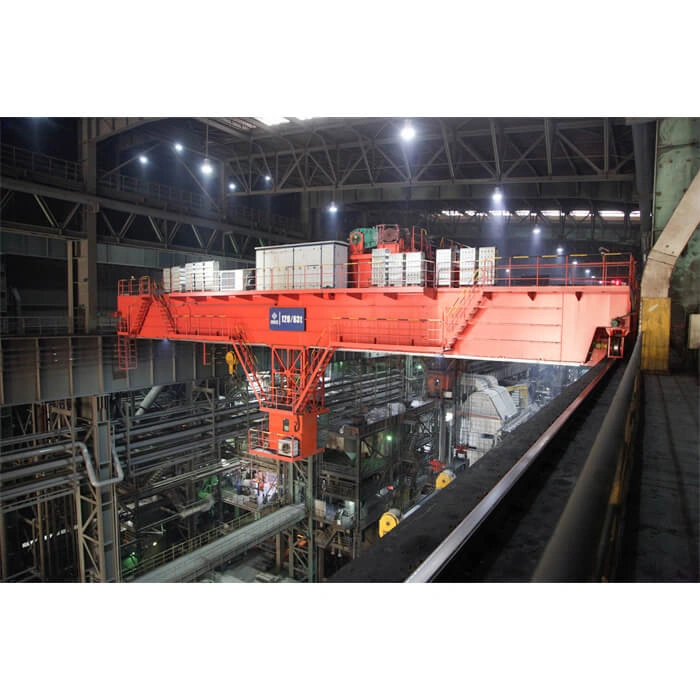
Key Components:
Two main girders – Provide structural strength and rigidity.
End carriages – Connect girders to the runway.
Trolley & hoist – Mounted on top of girders (not between them). The hoist is often a specialized casting hoist with planetary gears and high thermal tolerance.
Cabin or remote control – Typically a heated/air-conditioned cabin offering a clear view of the pouring operation.
Crab travel mechanism – For lateral movement across the bay.
Auxiliary hoist – Many models include a smaller hoist for tilting ladles or handling accessories.
How It Differs from a Single Girder Casting Crane
| Feature | Single Girder | Double Girder |
|---|---|---|
| Lifting capacity | Usually ≤ 20 tons | 20 – 500+ tons |
| Hoist position | Under the girder | On top of girders |
| Hook height | Lower (less lift) | Higher (more lift) |
| Duty classification | A3–A5 | A6–A8 (true heavy-duty) |
| Heat resistance | Limited | Advanced insulation |
| Cost | Lower | Higher (but longer lifespan) |
Why Choose a Double Girder Casting Bridge Crane? – Key Advantages
1. Extreme Lifting Capacity
Double girder cranes can easily handle from 20 tons up to 500 tons or more. This makes them ideal for moving large ladles, converters, and heavy castings.
2. Higher Hook Lift
Because the trolley runs on top of the girders, the hook can rise much closer to the bridge. This maximizes vertical usable space in the foundry bay—critical when working with tall molds or ladles.
3. Superior Stability & Low Sway
The wide girder spacing reduces lateral sway during acceleration and deceleration. Precise positioning is essential when pouring molten metal into a mold; double girder cranes offer smoother, more controlled movements.
4. Designed for Severe Duty (Class A6–A8)
Casting bridges operate 24/7 in high-temperature, high-dust environments. Double girder designs use heavier wheel loads, larger diameter wheels, and reinforced end trucks to meet CMAA Class D, E, or F service classifications.
5. Heat Protection Systems
Foundry cranes are exposed to radiant heat. A proper double girder casting crane includes:
Heat shields on the hoist and trolley.
High-temperature-resistant cables and lubricants.
Cooling fans for electrical enclosures.
Heat-resistant paint.
Typical Applications
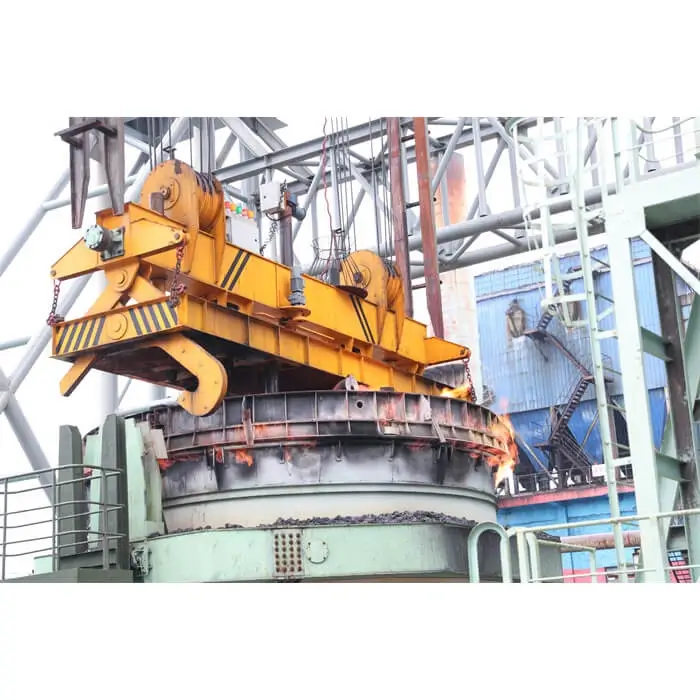
Double girder casting bridge cranes are found in:
Steel foundries – Charging scrap into furnaces, pouring molten steel into ingot molds.
Iron foundries – Handling hot metal ladles, moving large castings to shakeout.
Non-ferrous casting plants – Aluminum, brass, copper ladle handling.
Heavy equipment manufacturing – Moving large cast housings, gear blanks, press frames.
Cement & mining – Handling mill liners, grinding balls, heavy cast components.
Safety Standards & Regulations
Any double girder casting bridge crane must comply with:
ASME B30.2 – Overhead and gantry cranes.
CMAA Specification No. 70 – For double girder cranes.
OSHA 1910.179 – Overhead crane safety.
EN 12463 – For foundry crane safety (Europe).
FEM 9.511 – Classification of cranes for severe duty.
Maintenance Tips for Long Service Life
To keep your double girder casting bridge crane operating safely and efficiently:
Daily – Check wire ropes for kinks or broken wires. Inspect hooks for cracks (NDT monthly). Test limit switches.
Weekly – Lubricate gears, bearings, and wheels with high-temperature grease. Inspect brakes.
Monthly – Check alignment of girders and rails. Measure wheel wear. Inspect electrical contacts.
Quarterly – Perform load test (125% of rated load). Verify overload protection.
Annually – Full professional inspection including UT of welds and hook shanks
Conclusion
The double girder casting bridge crane is not just another overhead crane—it is a critical piece of safety-critical production equipment for any metal casting operation. Its superior lifting capacity, high hook lift, thermal protection, and redundant safety systems make it the only choice for moving molten metal or heavy castings.
If you are planning a new foundry or upgrading an existing line, choosing the right double girder casting crane will improve productivity, enhance safety, and reduce long-term operating costs.
Henan Mining Cranes Co., Ltd. is a leading crane manufacturer in China. With decades of industry experience, we have become a trusted partner in the global material handling solution field. We are committed to providing comprehensive professional services tailored to your specific needs. We recommend the most suitable crane products, offer accurate quotations, and design customized solutions. Welcome to contact us.
Get In Touch
Email: sale@henanminecranes.com
Website: https://henanminecrane.com/
Whatsapp:16627702870