
 sale@henanminecranes.com
  +86 16627702870

What Is a Low Headroom Single‑Girder Crane?
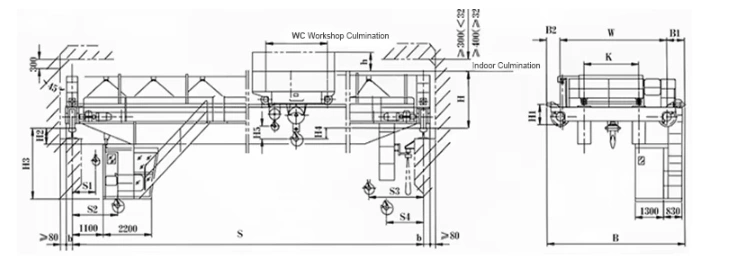
A low headroom single-girder crane is a specialized type of overhead crane characterized by its compact design, which minimizes the vertical space required for installation and operation. Unlike standard single-girder cranes, which often require significant overhead clearance for their hoists and trolley systems, low headroom models are engineered to reduce the overall height of the crane’s upper components—typically by mounting the electric hoist directly on the lower flange of the single main girder or offsetting it to one side. This innovative design ensures that the crane can operate effectively in facilities with limited headroom, while still delivering the lifting capacity and maneuverability needed for industrial tasks.
At its core, the crane consists of three main components: a single horizontal girder (the primary load-bearing structure), end trucks that allow the crane to travel along overhead rails, and an electric hoist (mounted in a space-saving configuration) that handles the lifting and lowering of loads. This simplified yet robust structure makes low headroom single-girder cranes lighter, more compact, and easier to install than their double-girder counterparts—without sacrificing strength or reliability.
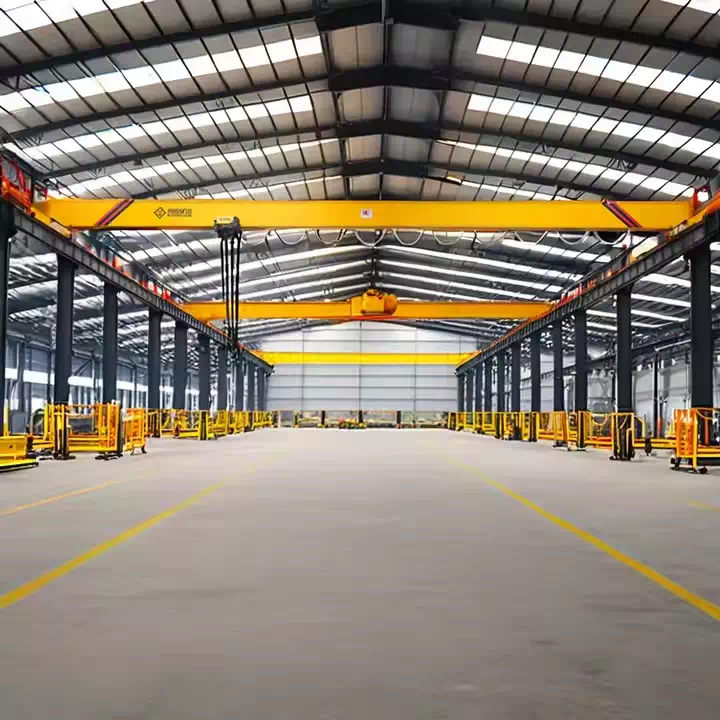
Key Design Advantages of Low Headroom Single‑Girder Cranes
Maximized Vertical Space Utilization
Compact and Lightweight Structure
Cost-Effective Installation and Operation
Core Features of Low Headroom Single‑Girder Cranes
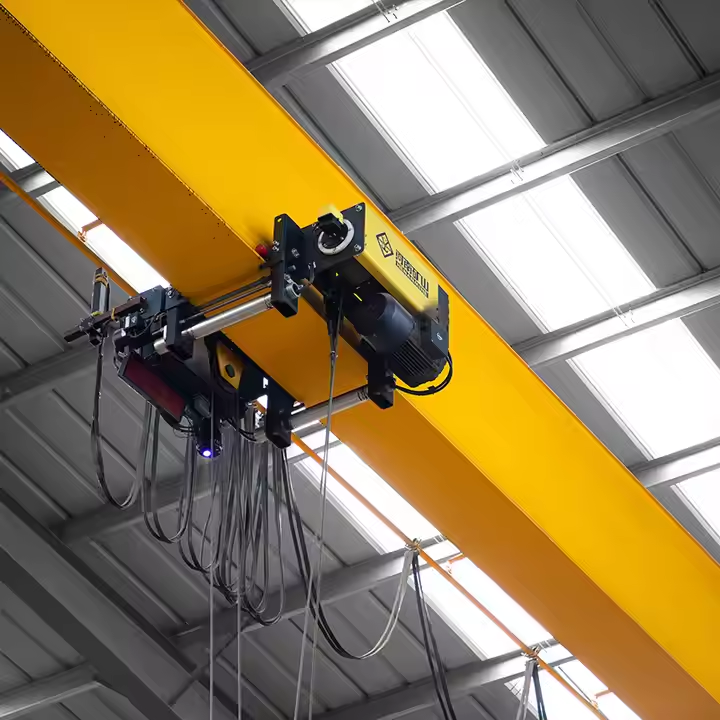
Space-Saving Hoist Configuration: Most low headroom cranes use an eccentric or side-mounted hoist trolley, which positions the hoist off-center or along the side of the main girder. This design eliminates the need for additional overhead space for the hoist, maximizing lifting height and reducing the crane’s overall profile.
High-Strength Girder Design: The single main girder is typically constructed from welded steel plate or I-beam, ensuring exceptional load-bearing capacity and structural rigidity. Many models adhere to international standards (such as GB/T 3811-2008 and JB/T 1306-2008) to guarantee quality and safety.
Dual-Speed Operation: Many low headroom cranes feature dual-speed motors for both lifting and traveling, allowing for precise positioning of loads (at low speeds) and efficient movement (at high speeds). Some models also offer variable frequency drives (VFD) for smoother, more energy-efficient operation.
Safety Features: Standard safety features include overload protection, emergency stop buttons, limit switches (to prevent over-lifting or over-traveling), and anti-collision devices. These features ensure the safety of operators, equipment, and loads during operation.
Applications of Low Headroom Single‑Girder Cranes
Manufacturing Facilities
Warehouses and Distribution Centers
Maintenance and Repair Shops
Renovated or Older Facilities
Technical Specifications to Consider When Choosing a Low Headroom Single‑Girder Crane
When selecting a low headroom single-girder crane for your facility, it’s important to consider the
Specification |
Typical Range |
Key Considerations |
|---|---|---|
Lifting Capacity |
1 ton – 32 tons |
Choose a capacity that exceeds your maximum expected load to ensure safety and durability. |
Span Length |
7.5 meters – 31.5 meters |
Match the span to the width of your facility to ensure full coverage of the work area. |
Lifting Height |
6 meters – 30 meters |
Consider the vertical space available and the maximum height needed to lift loads. |
Working Class |
A3 – A5 (light to medium duty) |
Select a working class based on the frequency of use (e.g., A3 for intermittent use, A5 for frequent, heavy-duty use). |
Why Choose a Low Headroom Single‑Girder Crane Over Alternative Lifting Solutions?
Superior Space Efficiency: Unlike standard overhead cranes, which require significant headroom, low headroom models operate in minimal vertical space, eliminating the need for costly building renovations.
Higher Lifting Capacity Than Forklifts: Forklifts are limited by their load capacity and maneuverability, especially in tight spaces. Low headroom cranes can lift heavier loads (up to 32 tons) and move them horizontally across the entire work area with precision.
Improved Safety: Manual hoists and forklifts pose safety risks such as operator fatigue, load instability, and collisions. Low headroom cranes are equipped with safety features that reduce these risks, and their remote or pendant control allows operators to stand at a safe distance from loads.
Long-Term Cost Savings: While the initial investment in a low headroom crane may be higher than a forklift or manual hoist, the reduced maintenance costs, energy efficiency, and increased productivity make it a more cost-effective solution over time. For example, a steel fabrication plant saved approximately $60,000 in building modification costs by upgrading to a low headroom crane instead of raising the roof.
Versatility: Low headroom cranes can be customized to meet the specific needs of your facility, making them suitable for a wide range of applications—from light-duty warehouse tasks to heavy-duty manufacturing operations.
Conclusion
For industrial facilities facing space constraints—whether due to low ceilings, aging structures, or the need to maximize vertical space—the Low Headroom Single‑Girder Crane is a game-changing solution. Its compact design, space-saving features, and versatile performance make it ideal for a wide range of applications, from manufacturing and warehousing to maintenance and specialized environments. By choosing a low headroom single-girder crane, businesses can eliminate the need for costly building renovations, improve operational efficiency, enhance safety, and achieve long-term cost savings.
Henan Mining Cranes Co., Ltd. is a leading crane manufacturer in China. With decades of industry experience, we have become a trusted partner in the global material handling solution field. We are committed to providing comprehensive professional services tailored to your specific needs. We recommend the most suitable crane products, offer accurate quotations, and design customized solutions. Welcome to contact us.
Get In Touch
Email: sale@henanminecranes.com
Website: https://henanminecrane.com/
Whatsapp:16627702870