PRODUCT INTRODUCTION
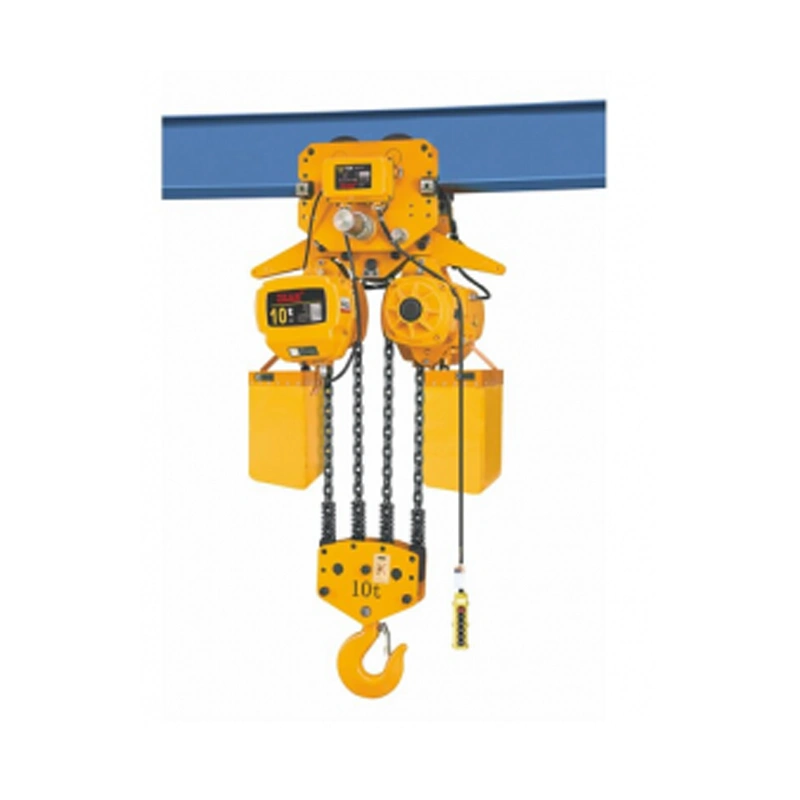
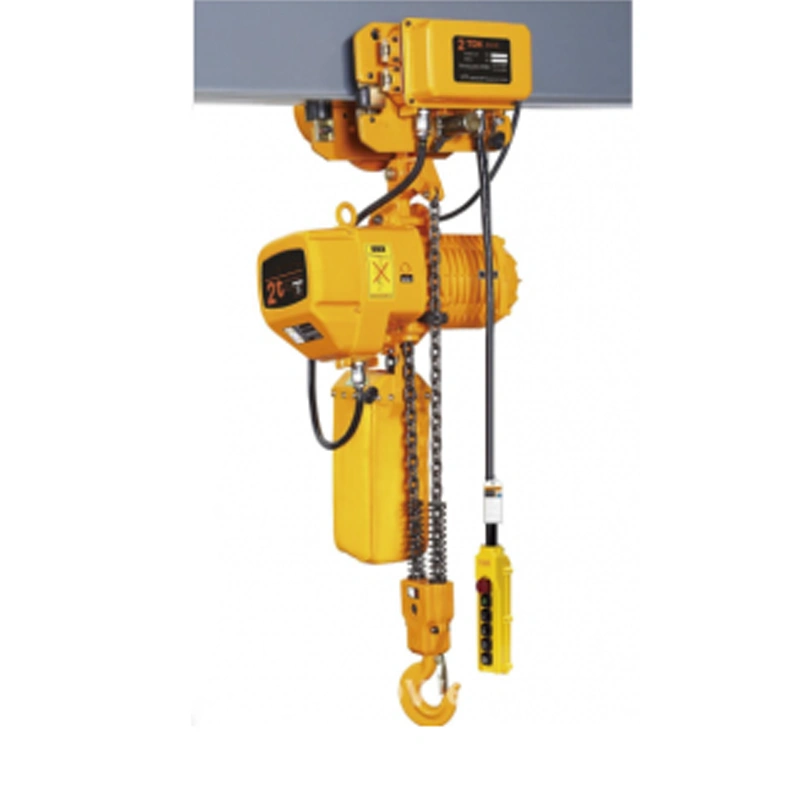
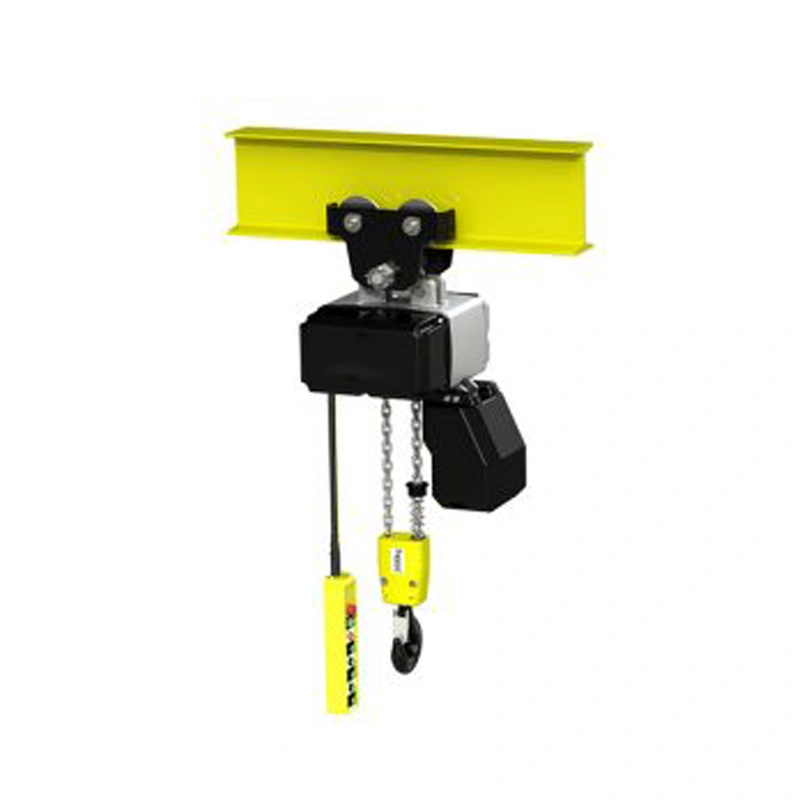
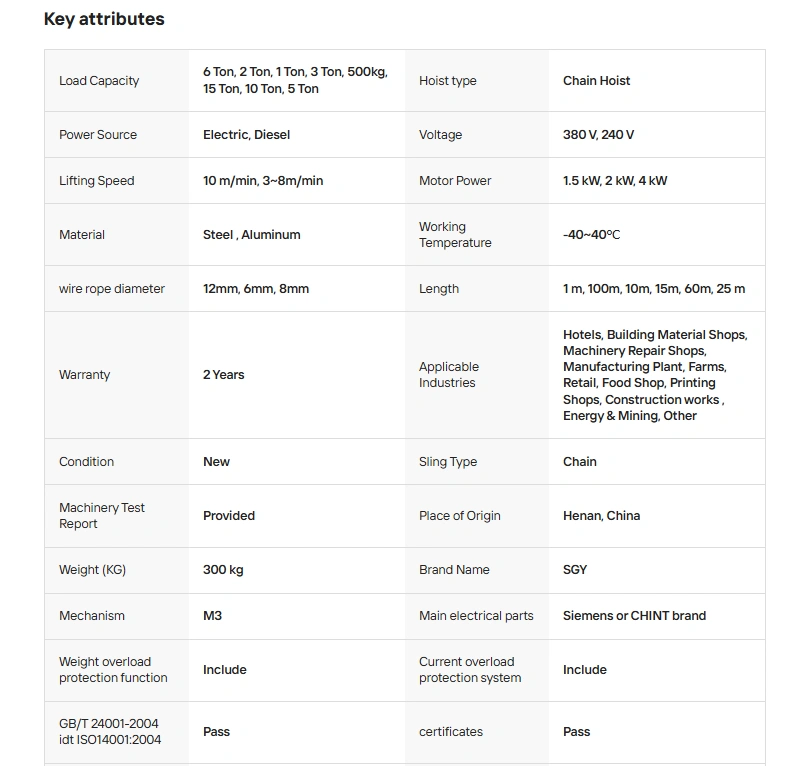
The Electric Chain Hoist is a compact, efficient, and versatile lifting device widely used in industrial, commercial, and workshop environments for light to medium lifting tasks. Unlike wire rope hoists, which use steel cable, the electric chain hoist employs a specially hardened load chain that runs over a sprocket (lift wheel) driven by an electric motor. The chain falls into a chain container (bag or box) and provides smooth, precise lifting with excellent control at low speeds.
Electric chain hoists are known for their high duty cycle capability, low headroom design, and ease of installation. They are typically suspended from a fixed point (hook, trolley, or beam clamp) or mounted on a manual or motorized trolley for travel along an I‑beam or monorail. Capacities range from 0.125 tons (125 kg) to 5 tons (occasionally up to 10 tons for heavy‑duty models). Lifting heights are available from 3 meters up to 30 meters or more, with custom chain lengths.
APPLICATION
1. Assembly Lines & Workstations
Engine & Transmission Assembly: Lifting engine blocks, cylinder heads, and transmissions onto assembly stands, with precise speed control for alignment.
Electronics Assembly: Handling delicate electronic enclosures, chassis, and subassemblies with gentle, vibration‑free lifting.
Parts Kitting: Lifting heavy components (brake drums, axles, pumps) from storage bins and placing them into kits for line‑side delivery.
2. Machine Tending (CNC, Lathes, Mills)
Loading Raw Material: Lifting bars, plates, castings, or forgings from floor pallets onto CNC lathes, milling machines, and machining centers.
Unloading Finished Parts: Removing heavy machined components from machines and placing them onto inspection tables or pallets.
Tool & Fixture Changing: Lifting heavy vises, rotary tables, and tooling fixtures into position on machine beds.
3. Warehouses & Distribution Centers
Pallet Handling: Lifting pallets of goods (up to 1‑2 tons) from floor storage onto carts, conveyors, or trucks in areas where forklifts cannot maneuver.
Drum & IBC Lifting: Handling 200‑liter drums, IBC totes, and bulk bags for mixing, filling, or shipping.
High‑Shelf Retrieval: Accessing pallets stored on racks in narrow aisles, using the hoist on a manual or motorized trolley.
4. Maintenance & Repair Shops (MRO)
Engine & Transmission Removal: Lifting engines, transmissions, gearboxes, and differentials from vehicles or industrial machinery for overhaul.
Pump & Motor Servicing: Handling large pumps, compressors, blowers, and electric motors on repair benches.
Equipment Maintenance: Removing heavy components (rollers, shafts, drums) from production machines for servicing.
5. Metal Fabrication & Welding Shops
Plate & Beam Positioning: Lifting steel plates, beams, channels, and tubes from floor stacks onto cutting tables (plasma, laser, shear) or welding positioners.
Subassembly Movement: Transporting heavy fabricated subassemblies (frames, brackets, tanks) between workstations.
Finished Product Handling: Lifting completed fabrications (hoppers, platforms, staircases) onto pallets or trucks.
6. Automotive Manufacturing & Assembly
Press Shop Support: Lifting and feeding steel coils to uncoilers; handling stamping dies for changeovers.
Body Shop Subassembly: Lifting door assemblies, fenders, hoods, and chassis components to assembly lines.
Powertrain Assembly: Lifting engine blocks, cylinder heads, transmission housings, and axle assemblies with precise positioning.







 sale@henanminecranes.com
  +86-0373-3088011