

 sale@henanminecranes.com
  +86-0373-3088011
What is a Jib Crane?
A jib crane is a type of overhead lifting machine with a horizontal member (called a jib or arm) that supports a movable hoist. This arm is attached to a vertical supporting structure, which can be a floor-mounted column or a wall.
The defining characteristic of a jib crane is its ability to lift and move loads within a fixed, circular or semi-circular area. Think of it as a dedicated robotic arm for a specific workstation—it allows an operator to lift a heavy object, swing it into position, and lower it with precision, all without the need for a forklift or overhead bridge crane.
The Core Components of a Jib Crane
To understand how a jib crane works, it helps to break it down into its fundamental parts:
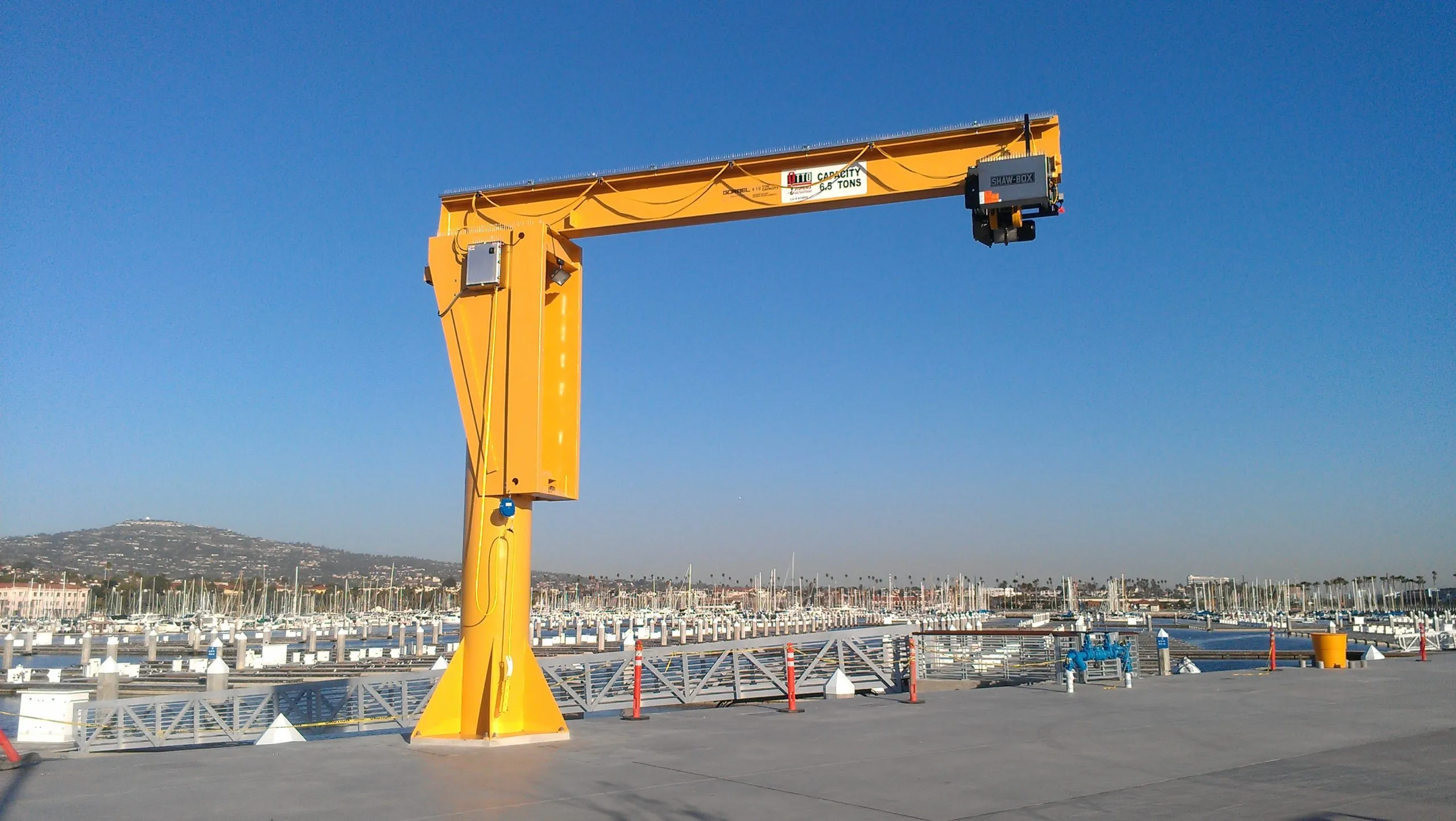
The Jib (Boom): This is the horizontal arm of the crane. It is typically made of a steel beam (often an I-beam) and is the track upon which the hoist travels. The length of the jib determines the crane's reach.
The Mast/Column: This is the vertical support structure. In a free-standing model, it is a steel column bolted to a concrete foundation. In a wall-mounted model, the building's wall acts as the support.
The Hoist: This is the device that actually does the lifting. It is attached to the jib and can be a manual chain hoist, an electric chain hoist, or a wire rope hoist. The hoist is usually mounted on a trolley.
The Trolley: The trolley is the wheeled unit that travels along the length of the jib. It carries the hoist, allowing the operator to move the load horizontally in and out from the mast or wall.
The Rotation Mechanism: This allows the jib to swing. It can be a simple pivot point with bearings or a more complex slewing ring. The rotation mechanism determines the arc of coverage.
The Foundation/Mount: For column cranes, this is a reinforced concrete base that anchors the mast and prevents tipping. For wall-mounted cranes, it is a heavy-duty bracket bolted to the building's structure.
Types of jib cranes
Wall Mounted Jib Crane
A wall mounted jib crane (also called a wall traveling or wall bracket jib crane) is attached directly to a building’s structural column or a reinforced wall. The jib pivots at the wall connection, allowing it to swing in an arc—typically up to 200 degrees—covering a semi circular area.
The arm can be either a fixed radius design or a cantilevered style. The hoist may run on the bottom flange of the arm (manual or powered trolley) or be suspended from a boom.
Key Advantages
Space‑Saving: Because it uses existing building walls, it does not occupy valuable floor space. This is ideal for congested areas where floor space is at a premium.
Cost‑Effective: Generally less expensive than column‑mounted units because you don’t need a dedicated foundation or floor‑standing column.
Easy to Integrate: Can be installed along assembly lines, workstations, or beside existing equipment without major floor modifications.
Good for Narrow Aisles: Perfect for areas where a floor‑standing column would obstruct traffic.
Limitations
Limited Rotation: Most wall‑mounted jibs only swing about 180° to 200°, leaving a blind spot directly opposite the wall.
Dependent on Building Strength: The wall or column must be structurally capable of handling the imposed loads (bending moments and shear forces). An engineering assessment is mandatory.
Reach Limitations: The jib length is somewhat limited by the wall’s capacity; very long arms may require additional support.
Not Portable: Once installed, relocation is difficult and usually requires new mounting points.
Column Jib Crane
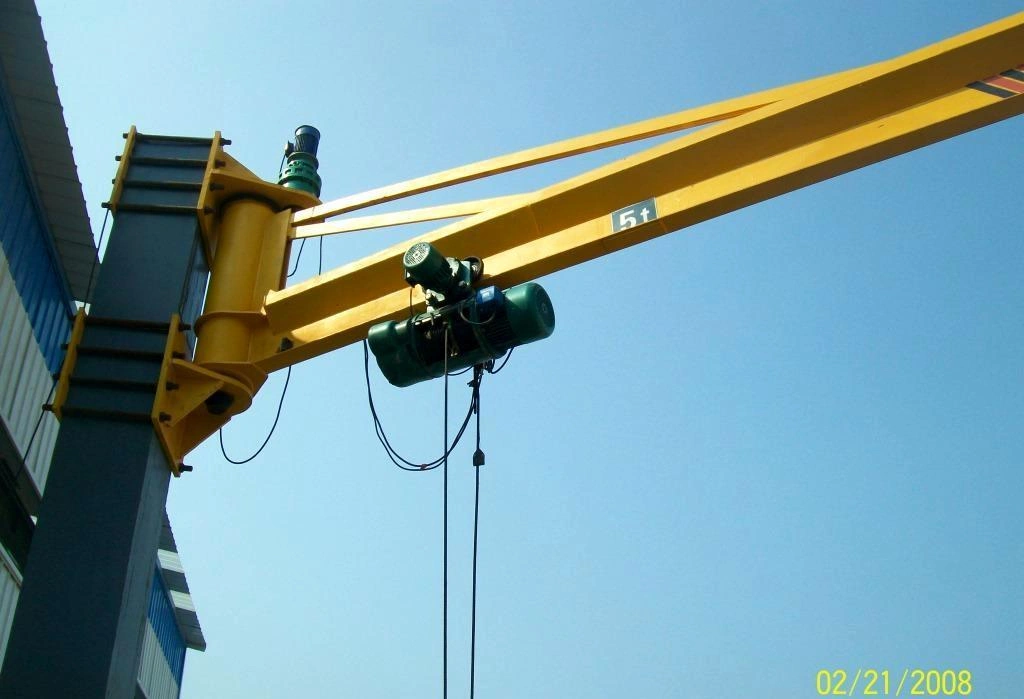
A column jib crane (or pillar jib crane) consists of a vertical mast (column) anchored to a concrete foundation in the floor. The horizontal jib is attached to the top of the column and can rotate a full 360°, providing complete circular coverage. The column may be designed with a plain bearing or a slewing ring to enable smooth rotation.
Key Advantages
Full 360° Rotation: The load can be picked and placed anywhere within a full circle around the column, offering maximum flexibility.
No Building Attachment: The crane is completely self‑supporting. You don’t need to worry about the strength of existing walls, and you can place it anywhere with proper floor space.
High Capacity: Column‑mounted jibs can be designed for heavier loads and longer reaches because the foundation and column are engineered specifically for the task.
Portable Options: Some manufacturers offer “portable” column jibs with base plates that can be bolted down and moved if necessary (though still requiring floor anchors).
Limitations
Floor Space Consumption: The column occupies floor area, and the foundation may require excavation and concrete work, which can be disruptive.
Higher Installation Cost: Foundation preparation, concrete pouring, and the heavier column structure increase initial investment.
Obstruction: The column itself can be an obstacle for traffic or other equipment, especially in busy workshops.

Head‑to‑Head Comparison
| Feature | Wall‑Mounted Jib Crane | Column Jib Crane |
|---|---|---|
| Mounting | Attached to building wall/column | Floor‑mounted with concrete foundation |
| Rotation | Up to 200° (semi‑circle) | 360° (full circle) |
| Floor Space | None (uses wall) | Requires floor area for column and foundation |
| Installation | Simpler if wall is strong; no floor prep | Requires excavation, rebar, and concrete curing |
| Capacity | Typically light to medium (up to 5 tons) | Light to heavy (up to 10+ tons) |
| Reach (Span) | Limited by wall strength | Can be longer, depending on foundation |
| Cost | Lower initial cost | Higher due to foundation and column |
| Mobility | Permanent; relocation difficult | Can be unbolted but foundation stays |
| Ideal Applications | Workstations, assembly lines, narrow aisles | Open bays, outdoor yards, large fabrication shops |
How to Choose: Key Considerations
When deciding between a wall‑mounted and a column jib crane, ask yourself these questions:
1. Where is the work happening?
If your lifting tasks are concentrated along a wall, near a machine line, or in a narrow corridor, a wall‑mounted jib is the obvious choice. It keeps the floor clear and puts the crane exactly where you need it.
If you need to serve a wide area from a central point, or if you need to rotate completely around the load, a column jib is essential.
2. What is the load capacity and reach?
For lighter loads (under 2–3 tons) and moderate reaches (up to 6–8 meters), wall‑mounted units are often sufficient.
For heavier loads or longer spans, a column‑mounted crane with a robust foundation will provide the necessary stability and safety.
3. Can your building support a wall‑mounted crane?
Have a structural engineer evaluate the wall or column. If it’s not strong enough, reinforcement may be costly, making a column crane more attractive.
4. What is your budget?
Wall‑mounted jibs are generally cheaper upfront, especially if the building structure is ready.
Column jibs involve foundation work and a heavier structure, but they offer greater flexibility and may be the only option in open spaces.
5. Do you need 360° rotation?
If your workflow requires moving materials from one side of the crane to the opposite side without repositioning the load, a column crane’s full circle is indispensable.
Conclusion
A jib crane is a powerful tool for optimizing material flow in any environment that requires repetitive lifting within a defined area. By understanding its components—the jib, mast, hoist, and trolley—and the different types available, you can select the perfect solution to enhance safety, boost productivity, and streamline your operations. Whether you need the 360-degree coverage of a free-standing model or the space-saving design of a wall-mounted unit, the jib crane remains a cornerstone of efficient material handling.
Henan Mining Cranes Co., Ltd. is a leading crane manufacturer in China. With decades of industry experience, we have become a trusted partner in the global material handling solution field. We are committed to providing comprehensive professional services tailored to your specific needs. We recommend the most suitable crane products, offer accurate quotations, and design customized solutions. Welcome to contact us.
Get In Touch
Email: sale@henanminecranes.com
Website: https://henanminecrane.com/
Whatsapp:16627702870
phone:+86-0373-3088011