PRODUCT INTRODUCTION
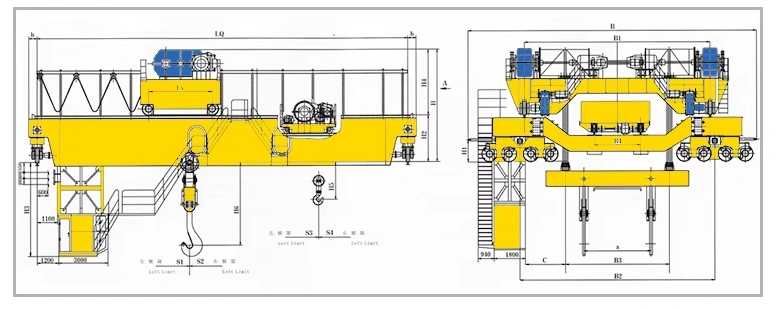
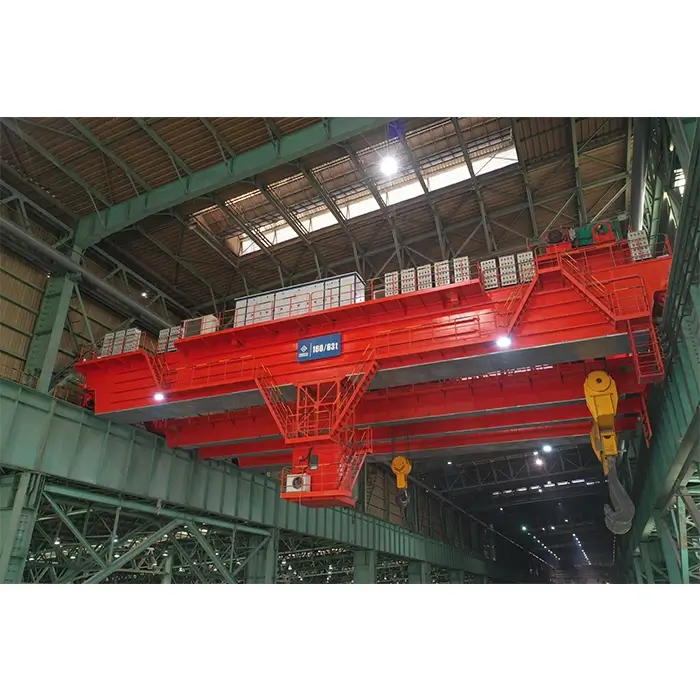
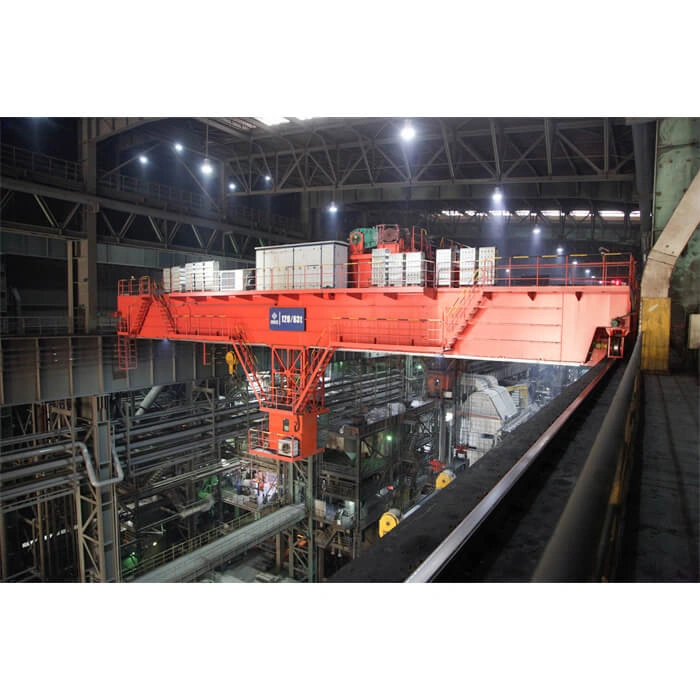
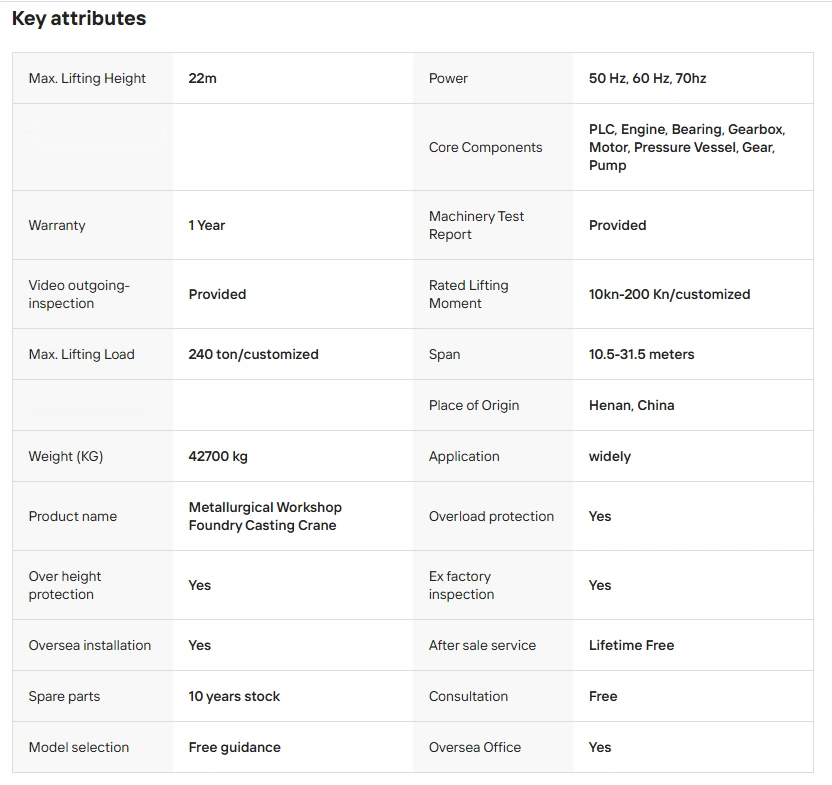
The YZ Double Girder Casting Bridge Crane is a heavy‑duty, high‑reliability overhead crane specifically engineered for the demanding environments of steel foundries, iron casting plants, and non‑ferrous metal casting facilities. The “YZ” designation typically indicates a metallurgical casting crane designed to handle molten metal, heavy ladles, and casting equipment under extreme conditions of high temperature, dust, fume, and thermal radiation.
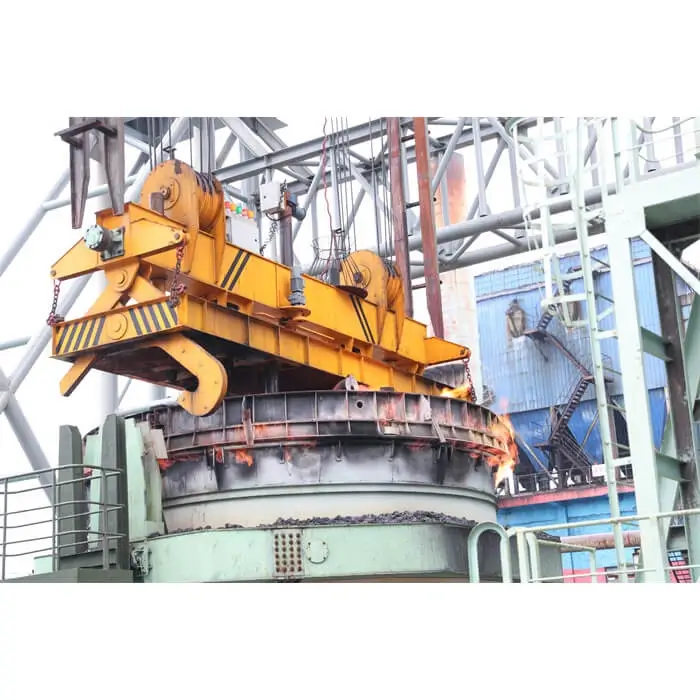
This crane features a robust double girder construction for maximum rigidity and stability, essential for precise ladle tilting and pouring operations. It is equipped with a main hoist for lifting and tilting ladles (capacities from 10 tons up to over 500 tons) and often an auxiliary hoist for handling molds, cores, or scrap. The trolley incorporates a specially designed crab that allows the ladle to be traversed, hoisted, and tilted in a controlled manner. Critical safety features include redundant braking systems, emergency ladle lowering, overload protection, and heat‑resistant insulation for electrical components and operator cabins.
APPLICATION
1. Molten Metal Pouring into Sand Molds
Ladle Transport: Lifting a ladle filled with molten iron, steel, or non‑ferrous metal (e.g., aluminum, bronze) from the furnace tapping area to the molding line.
Controlled Pouring: Using the tilting mechanism to pour molten metal smoothly into individual sand molds, minimizing splashing and casting defects.
Weight Control: Precise inching of the ladle tip to fill molds with exact quantities (e.g., for repeatable casting weights).
2. Foundry Charging & Melting Support
Scrap & Alloy Charging: Using the auxiliary hoist to lift charging buckets filled with scrap steel, pig iron, ferroalloys, and flux, then discharging into an electric arc furnace (EAF) or induction furnace.
Hot Metal Transfer: Moving a transfer ladle from a blast furnace or cupola to a holding furnace or treatment station.
Furnace Tapping: Positioning a ladle under the furnace tapping spout to receive molten metal, then transporting it to the casting area.
3. Continuous Casting (Billet, Bloom, Slab)
Ladle onto Turret: Lifting a full ladle (100‑300 tons) and placing it onto the ladle turret of a continuous casting machine.
Tundish Handling: Lifting and positioning tundishes (intermediate vessels) under the ladle for steel flow control.
Mold & Oscillator Change: Using the auxiliary hoist to replace molds, oscillator tables, and segment rollers during maintenance.
4. Ingot Casting & Teeming
Teeming (Top Pouring): Lifting a ladle over a series of ingot molds and pouring molten steel into each mold via a teeming nozzle.
Ingot Stripping: Using the auxiliary hoist to lift finished ingots from their molds (stripping operation) after solidification.
Hot Top Handling: Placing insulating hot tops on ingot molds to promote directional solidification.
5. Non‑Ferrous Casting (Aluminum, Copper, Zinc)
Aluminum Furnace Charging: Lifting charge buckets of aluminum scrap, sows, and alloys into reverberatory or holding furnaces.
Crucible Pouring: Tilting a crucible or ladle to pour molten aluminum into permanent molds or low‑pressure casting machines.
Dross Skimming: Using a skimming tool attached to the auxiliary hoist to remove dross from the furnace surface.
6. Steel Foundry – Investment Casting (Lost Wax)
Shell Handling: Lifting large investment casting shells (ceramic) and placing them into preheat furnaces.
Pouring Small Ladles: Using a smaller ladle (10‑50 kg) to pour molten steel into individual shell clusters.
Wax Tree Loading: Lifting wax pattern trees into slurry tanks for ceramic shell building.







 sale@henanminecranes.com
  +86-0373-3088011


