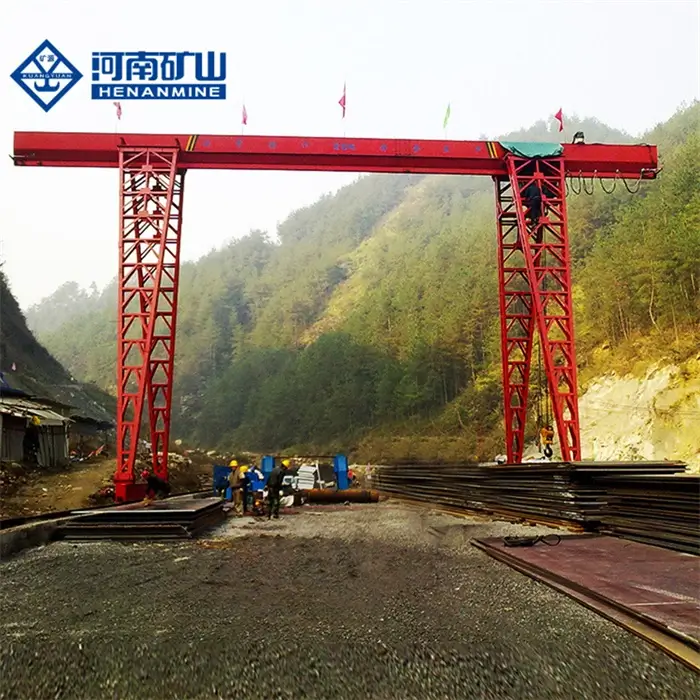
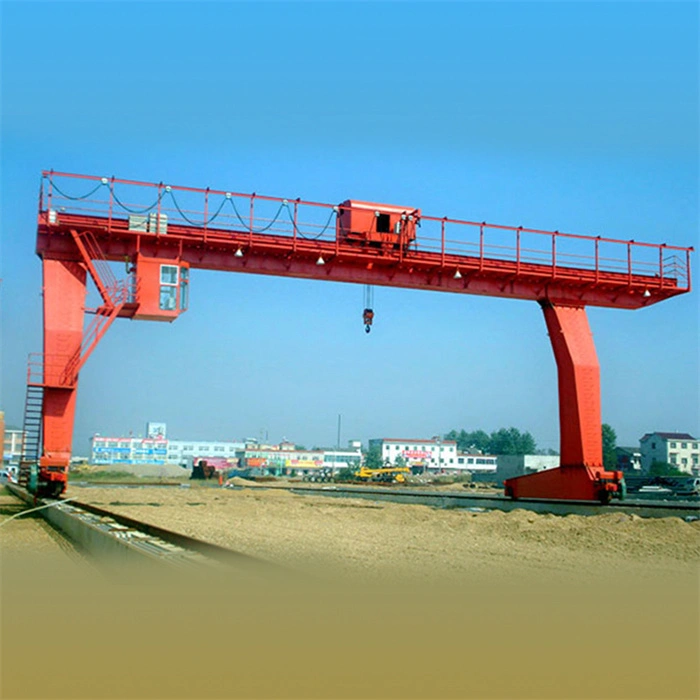
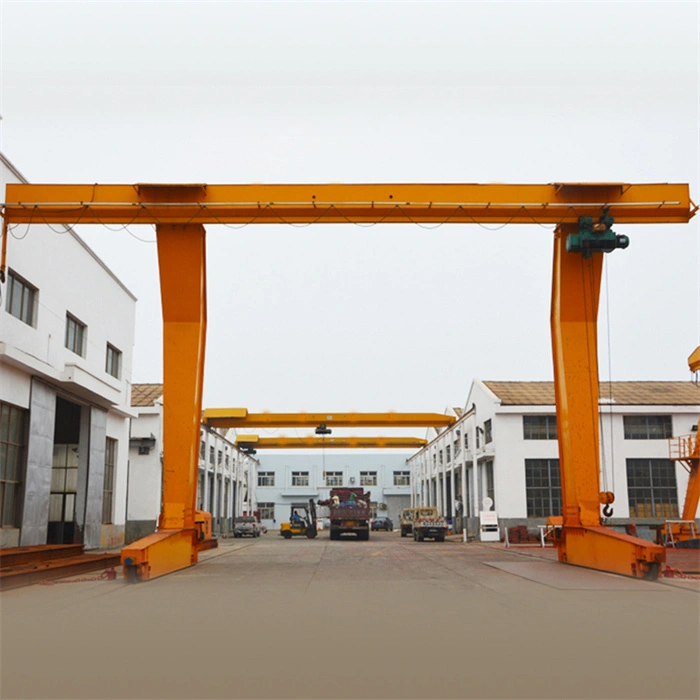
Home > Products > Top Quality U Shape Double Beams or Girders Heavy Duty Cabin Control Electric Rail Mobile Frame Crane
product
Container Rail Mounted Gantry Crane
Rail-Mounted Gantry Cranes
Rail mounted gantry cranes
Container Gantry Crane
Container Rail Mounted Gantry Crane
Rail-Mounted Gantry Cranes
Rail mounted gantry cranes
Container Gantry Crane
Top Quality U Shape Double Beams or Girders Heavy Duty Cabin Control Electric Rail Mobile Frame Crane
Authentication mark:
ccc
ce
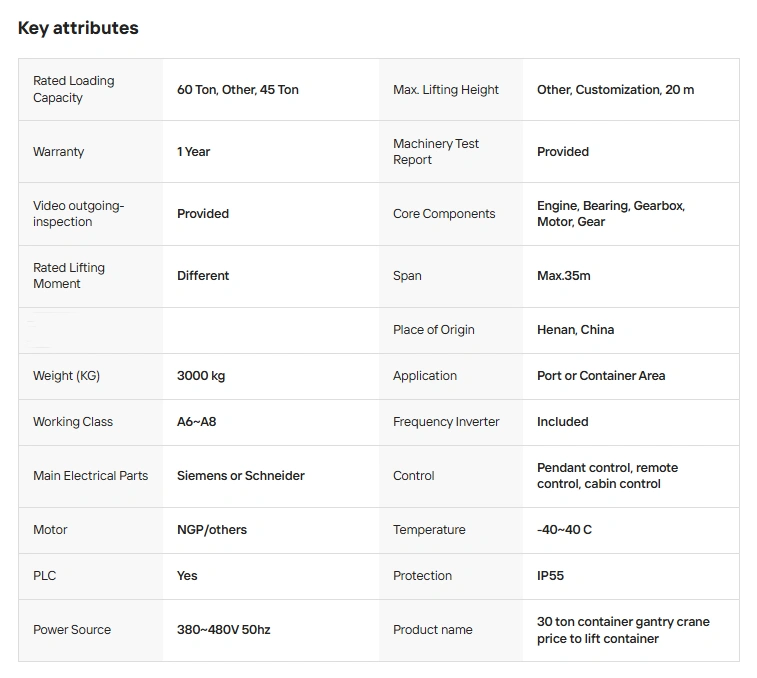
Capacity:
5-75t
Lifting Height:
/
Voltage/Hertz:
380V/50HZ
Working Class:
A4, A5, A6, A7
Span:
18-35m
Apply: A Rail Mounted Gantry (RMG Crane) is a specialized material handling equipment used in ports , container terminals, and intermodal yards for efficient cargo movement .
SUBMIT
CATALOGUE
HOT PRODUCTS
Product Overview

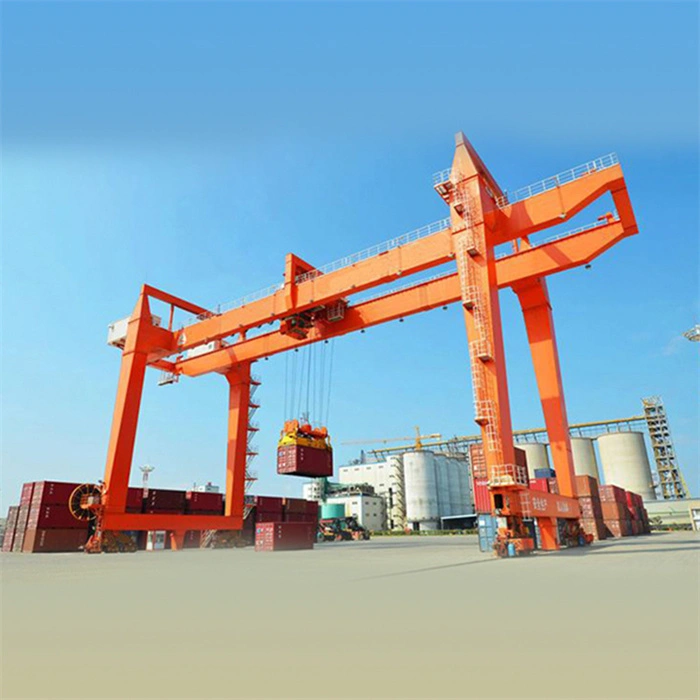
Product Description: Rail Mounted Container Gantry Crane (RMG)

Our Rail Mounted Container Gantry Crane (RMG) is engineered for precision, durability, and high-efficiency container handling in port terminals, intermodal yards, and logistics hubs. Designed with state-of-the-art technology and adhering to stringent international standards, our RMG offers unmatched performance, reliability, and safety for your cargo operations.


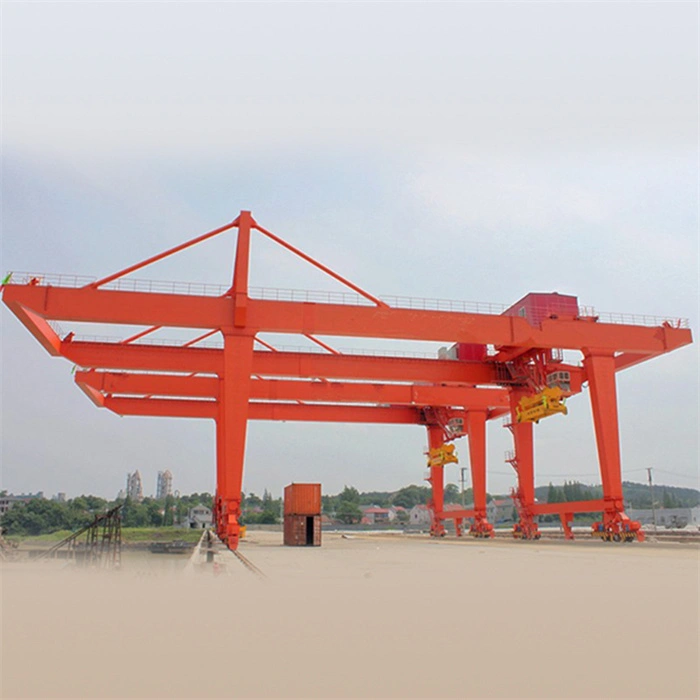
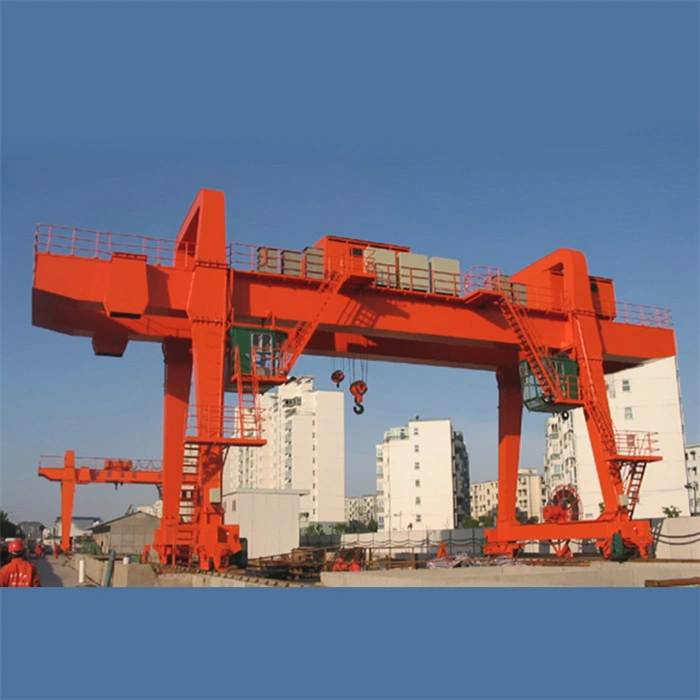
The MG series U-type double girder gantry crane is a robust, track-based lifting solution engineered for medium to heavy-duty outdoor applications. Its primary components include a durable structural frame, a high-efficiency lifting trolley, cross and long travel mechanisms, an operator cabin, a festoon cable system, and a precision electrical control system. The trolley operates smoothly along rails mounted on the main girder, ensuring reliable load handling. This crane is rated for demanding duty cycles, conforming to A4, A5, A6, and A7 working classes.


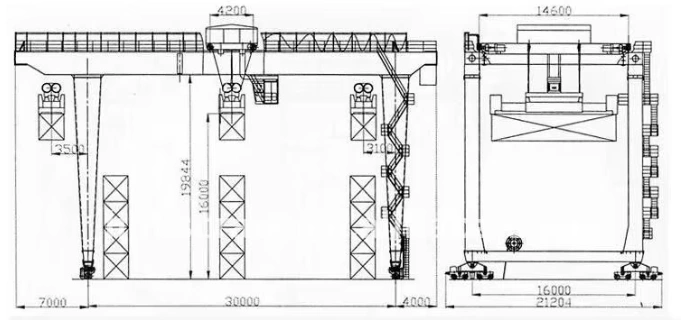
Parameters of RMG Rail Mounted Gantry Container Crane

Parameter Specification Range
Lifting Capacity (under spreader) 5 t — 65 t
Lifting Height 11 m — 27 m
Span 20 m — 65 m
Effective Outreach (Cantilever) 4.5 m — 18 m
Trolley Travel Speed 30 m/min — 180 m/min
Gantry Travel Speed 25 m/min — 300 m/min
Hoisting Speed (Full Load) 8 m/min — 45 m/min
Hoisting Speed (No Load) 16 m/min — 90 m/min

Design & Configuration:
Constructed to adapt to various operational environments, the main girder is available in box or truss designs. The crane is built to withstand wind pressures below or exceeding 125Pa. Standard operator cabins are designed for comfort and safety, featuring insulated flooring, toughened glass windows, and optional accessories such as fire extinguishers and fans. Additional customizations, including air conditioning, alarms, and intercom systems, are available upon request. Cantilever lengths can be tailored to meet specific operational requirements.


Applications:
Ideal for open-air storage yards, ports, railway terminals, hydroelectric power stations, logistics hubs, and other outdoor sites with frequent lifting needs. Please note: this crane is not suitable for handling molten metals, hazardous, explosive, corrosive, or overloaded materials.


Key Features:

  1. A track-operated double girder gantry crane built for medium to heavy industrial use.

  2. Lifting capacity ranges from 5 to 75 tons with a span of 18 to 35 meters.

  3. Operational temperature range: -20°C to +40°C.

  4. Multiple control options: remote or cabin-operated.

  5. Flexible power supply via cable or slide wire systems.

  6. U-type model specialized for container handling, available with or without cantilevers.

  7. Customizable design with main girders, legs, and travel beams fabricated from high-strength steel plates, ensuring compact dimensions suitable for ocean transport.


2. Mechanism Specifications

  • Hoisting & Trolley Mechanism: Complies with GB/T3811-2008, designed for duty groups M6, M7, M8.

  • Gantry Travel Mechanism: Complies with GB/T3811-2008, suitable for duty groups M5, M6, M7, M8.

  • Hoisting Drive: Equipped with Variable Frequency Drive (VFD) for smooth, efficient, and controllable lifting operations.


3. Key Components & Manufacturing Standards

  • Wire Rope & Drums: Groove base thickness tolerance after machining: -8% to +20% of nominal value. Drums are equipped with anti-derailment devices for wire ropes.

  • Gears & Reducers: Hardened gear tooth surfaces are used for enhanced durability and performance.

  • Wheels & Rails: Wheels are made from rolled or forged steel. Alignment tolerance for wheel axle centerlines within ±0.5‰ in horizontal projection, and vertical plane wheel axle skew tolerance between -0.5‰ to 2.0‰.

  • Span Tolerance: Deviation ΔS = ±[5 + 0.25(S/1000 – 16)] mm, with a limit of ±10 mm.


4. Container Spreader

  • Twistlock Specifications: Made from material with yield strength ≥450 MPa. After heat treatment, surface hardness ≥320 HB. Each twistlock undergoes non-destructive testing—cracks are not permitted, and repairs are unacceptable.

5. Cabin Features

  • Operator Cabin: Complies with GB/T20303.1 and GB/T20303.5 standards. Interior noise level ≤85 dB for a comfortable working environment.

6. Hydraulic & Lubrication Systems

  • Hydraulic System: Oil temperature rise during operation ≤40°C; pump inlet temperature ≤60°C.

  • Lubrication System: Lubrication diagrams are posted in the machinery room and near lubrication points. All points are clearly marked and safely accessible for scheduled maintenance as per design requirements.

7. Cabling & Illumination

  • Trolley Power Supply: Provided via cable trolley or cable drag chain systems.

  • Cabling: Shielded cables are used for VFD-driven motors; marine-grade cables are used for other circuits.

  • Cable Installation: Minimum bending radius for fixed cables ≥5× cable diameter.

  • Lighting: Average horizontal illumination ≥150 lx; average vertical illumination ≥200 lx at working areas.

8. Painting & Corrosion Protection

  • Surface Preparation: Manual derusting meets St3 level per GB/T8923.1-2011.

  • Coating System: Corrosion protection meets C4 environmental requirements as per GB/T30790.2-2014.


Integrated Safety Systems:

  • High-grade polyurethane buffers installed on trolley and crane travel ends to prevent over-travel.

  • Safety hook latches to secure loads during lifting.

  • Audible and visual alarms to alert personnel in the vicinity.

  • Rain covers for outdoor lifting mechanisms, electrical cabinets, and drive systems.

  • Standard protective earth conductor installation.

  • Voltage drop and current overload protection mechanisms for enhanced operational safety.


Application Scenario

The Rail Mounted Gantry (RMG) crane serves as a critical piece of infrastructure in high-throughput, organized cargo handling facilities. Its design, running on fixed tracks for exceptional precision, is dedicated to moving heavy-unit loads with maximum efficiency and reliability.


1. Port Container Terminals & Intermodal Yards
RMGs are the backbone of modern container terminals, where their primary function is the dense, vertical stacking of shipping containers. Their rail-guided movement allows for extremely narrow operating aisles, maximizing storage density in valuable yard space. They are indispensable for both import/export stacking and directly transferring containers between vessels, trucks, and trains, ensuring a seamless intermodal logistics chain.


2. Inland Container Depots and Logistics Hubs
Beyond the port perimeter, these cranes are equally vital at inland clearance depots and major logistics parks. They efficiently manage container freight station (CFS) operations, including container sorting, temporary storage, and load consolidation. The RMG's ability to handle containers, heavy palletized goods, and bulk materials with appropriate grabs makes it a versatile solution for distribution centers serving multiple transport modes.


3. Specialized Cargo Handling & Industrial Applications
While optimized for ISO containers using spreaders, the RMG can be fitted with various attachments like hooks or specialized grapples. This enables the secure lifting of other heavy or bulky items, such as steel coils, construction materials, and large project cargo, within industrial yards and manufacturing plant storage areas.


Application Scenarios & Technical Definitions for Rail Mounted Container Gantry Crane (RMG)

Our Rail Mounted Container Gantry Crane (RMG) is a pivotal piece of equipment designed for efficient container handling in intermodal yards, port terminals, and inland logistics hubs. As a subclass of rail-mounted gantry cranes, it is specifically engineered for stacking and transporting ISO shipping containers with high precision and reliability. Its design is optimized for both manual and fully automated operation, making it the backbone of modern, streamlined cargo terminals.


Core Technical Definitions & Advantages:

  • Span (S): The horizontal distance between the centers of the crane's runway rails. Our RMGs offer a wide configurable span from 20m to 65m, allowing adaptation to various yard layouts and stacking patterns (e.g., 1-over-5 or 1-over-7).

  • Effective Outreach (L1): The horizontal distance from the rail center on the cantilever side to the centerline of the spreader at its outermost working position over the cantilever. With an outreach range of 4.5m to 18m, our cranes provide excellent coverage for working lanes and efficient container transfer to/from trucks and terminal equipment.

  • Main Girder Camber: The upward vertical deflection of the girder at mid-span under its own weight. This pre-camber is precisely engineered to counteract deflection under load, ensuring long-term structural integrity and smooth trolley travel.

  • Main Girder Deflection (f): The maximum vertical deformation of the main girder when the crane is stationary with the total hoisting load, spreader, and trolley positioned at mid-span or at the end of the outreach.

  • Static Stiffness: A critical performance ratio defined as the girder deflection under rated load divided by the span (or outreach). Our cranes exceed industry standards:

    • For Automated Cranes: f ≤ S/1000 at mid-span, ensuring the pinpoint accuracy required for unmanned, automated stacking operations.

    • For Manually Operated Cranes: f ≤ S/750 at mid-span.

    • At Cantilever End: f' ≤ L1/350, guaranteeing stability and precision during container pickup and placement.


Key Application Environments & Enhanced Capabilities:

  1. Automated Container Terminals: The RMG is the ideal workhorse for automated stacking yards. Its compliance with stringent site levelness requirements (≤0.3%) and superior static stiffness ensures reliable, high-precision positioning for automatic trolley and gantry control systems, enabling continuous 24/7 operation.

  2. High-Density Intermodal Yards: With configurable spans and outreach, our RMGs maximize ground space utilization by enabling dense, high-bay container stacking. The high gantry travel speed (up to 300 m/min) facilitates rapid movement between stack blocks, significantly boosting throughput.

  3. Mixed-Mode & Remote-Operation Terminals: Designed for flexibility, our cranes can seamlessly switch between fully automated, remote-controlled, and local cabin-operated modes. The remote control station offers all cabin functions with high-definition video and stable data communication, allowing for safe and efficient remote handling.

  4. Environments Demanding High Durability: Built with premium materials (e.g., rolled/forged wheels, cast steel drums, Q355B/35 steel pulleys) and advanced manufacturing processes—including stress-relief heat treatment and precision static balancing (G16 grade) for welded drums—our RMGs are built to withstand heavy-duty cycles (up to M8 duty class) and harsh conditions.

  5. Operations Prioritizing Safety & Uptime: Integrated safety and maintenance features are standard:

  • Safety: Equipped with overspeed protection (cuts power at 1.1-1.25x rated speed), anti-sway systems (stabilizing loads to ±100mm within 2.5 cycles), and high-IP66-rated sensors for all-weather reliability.

  • Maintainability: Designed with dedicated maintenance cranes accessible via ground vehicles, automatic lubrication systems with real-time monitoring, and easily accessible control cabinets (>0.6m front operation space).

  • Energy-Conscious Facilities: For large installations (>400 kVA, lifting height >15m), an optional regenerative power feedback system is available to capture braking energy and return it to the grid, reducing overall energy consumption and operational costs.


  • In summary, our RMG is not just a lifting device but a fully integrated, intelligent material handling solution. It combines robust engineering, precise control, and advanced automation readiness to meet the evolving demands of efficiency, density, and reliability in global container logistics.


    Key Advantages Highlighted in These Applications:

    • Precision & Safety: Electrically-powered operation on fixed rails ensures accurate positioning and reduces the risk of operational drift, crucial for safe, high-density stacking.

    • High-Density Storage: The system significantly optimizes land use by enabling taller and tighter container stacks compared to rubber-tired alternatives.

    • Lifting Versatility: Standard spreaders for containers can be swapped for other grab attachments, providing flexibility to handle diverse cargo types.

    • Operational Efficiency: The fixed-path system allows for seamless integration with terminal operating systems (TOS), paving the way for advanced automation and reduced cycle times.

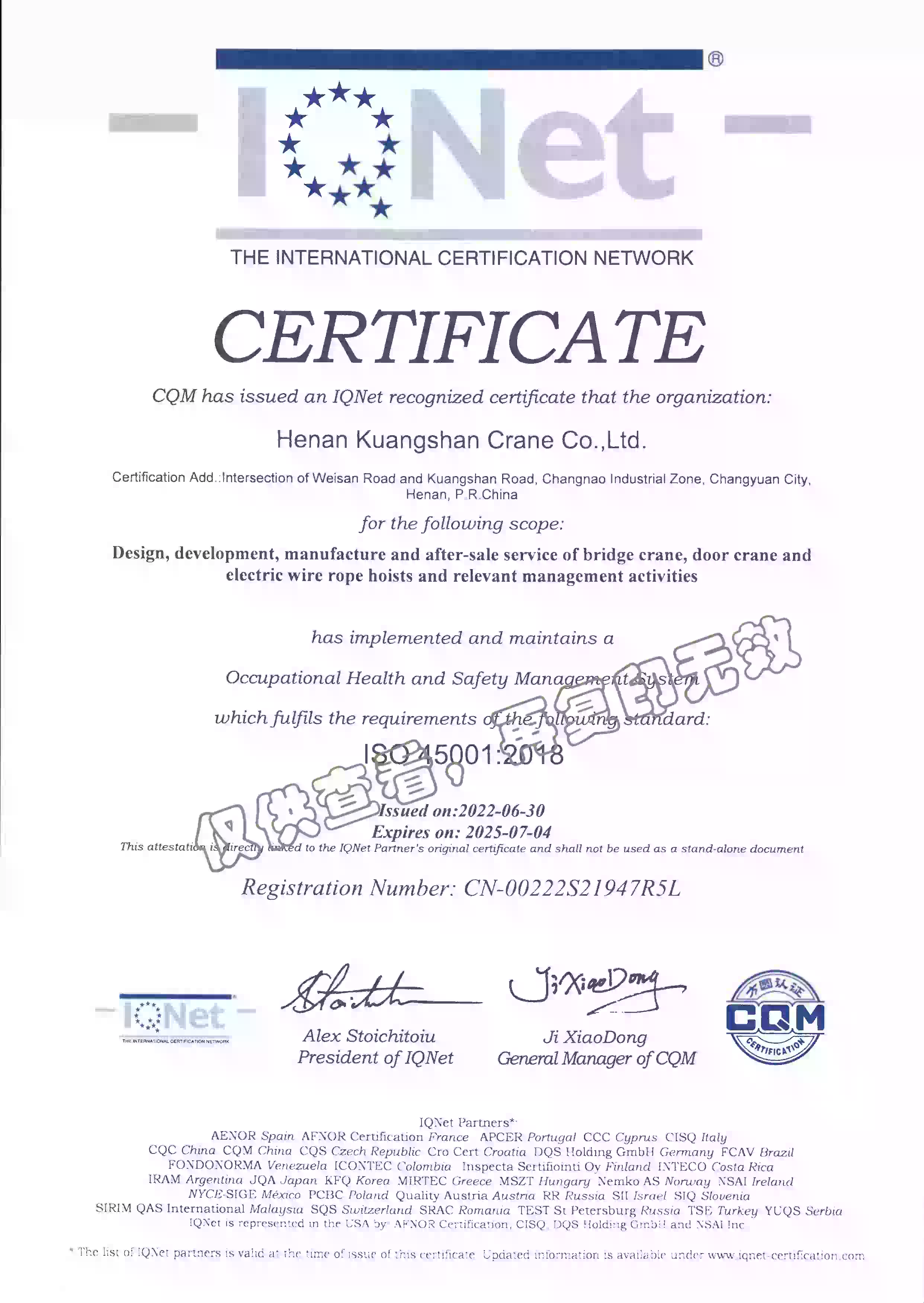
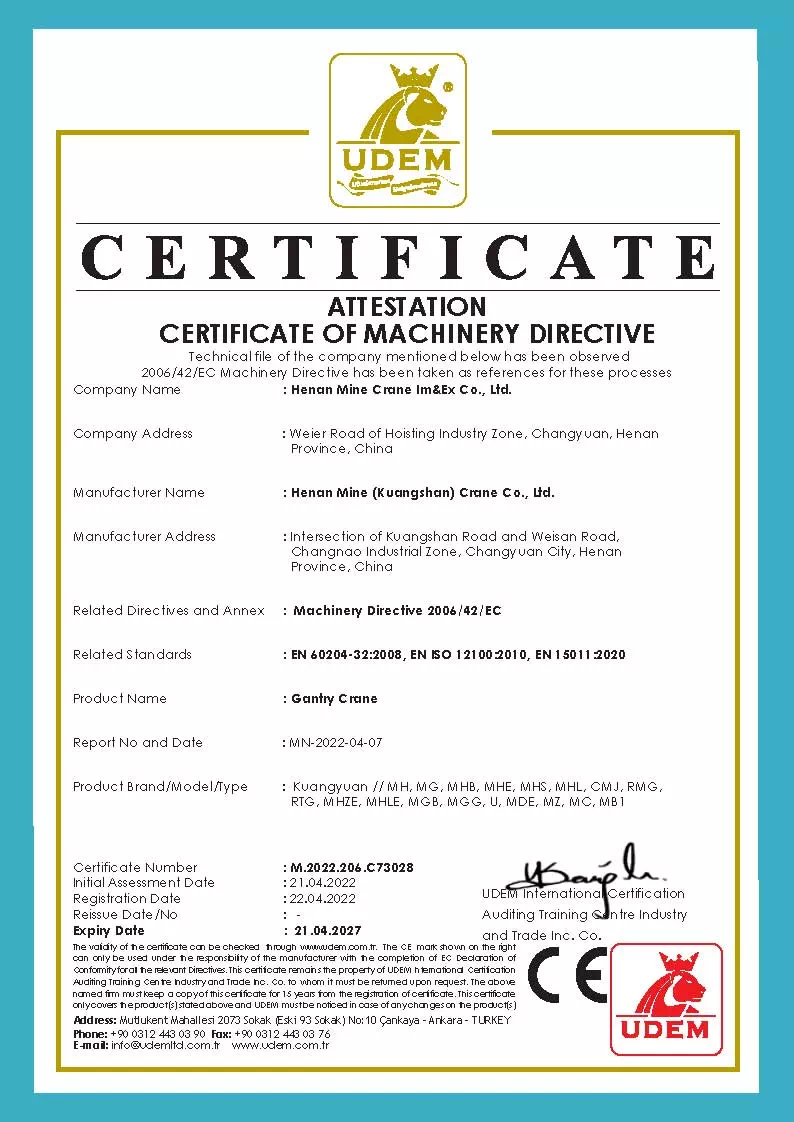
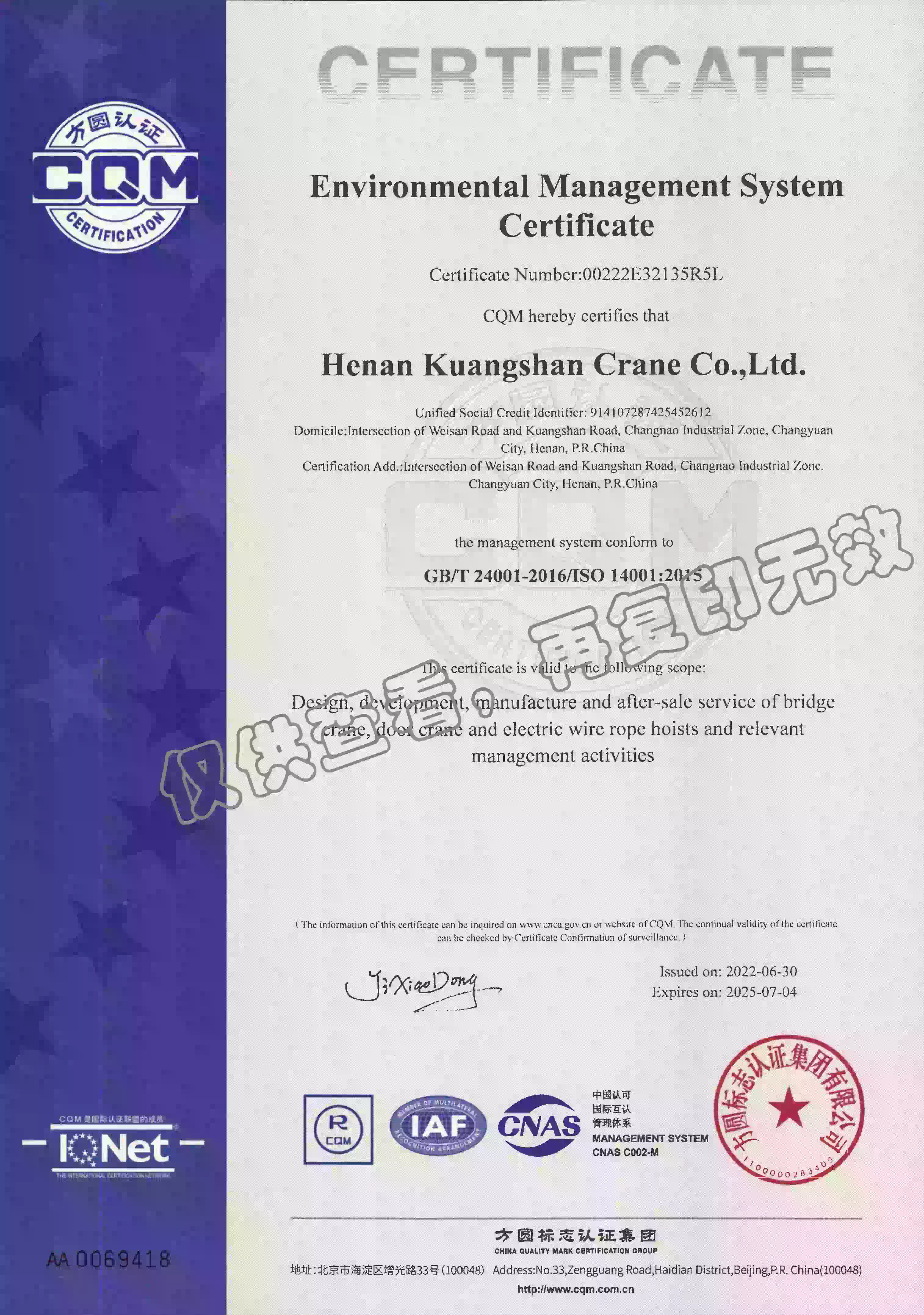
    Certificate
    • ISO Certificate
    • CE Certificate
    • FE Certificate
    form
    Get Quote
    wechat
    Wechat

    Wechat:

    +86 16627702870